

Views: 0 Author: Site Editor Publish Time: 2026-08-27 Origin: Site


Site logistics dictate industrial production efficiency. Material flow determines daily output capacity. When infrastructure bottlenecks occur, they directly cause severe revenue loss. Legacy infrastructure often creates permanent spatial constraints across manufacturing plants. Inadequate load-bearing crossings disrupt heavy equipment movement, slowing down supply chains dramatically. Operational downtime becomes incredibly costly when transport vehicles must reroute around failing concrete pathways. Upgrading these critical pathways requires a strategic intervention that minimizes disruption. Integrating a modern Bridge Steel Structure solves these complex layout challenges immediately. It supports extreme live loads safely while optimizing facility layouts. It accelerates facility upgrades efficiently, allowing you to bypass the long curing times associated with traditional materials. You achieve this structural transformation with minimal operational disruption, keeping active production lines running at full capacity.
Restrictive site topographies severely limit heavy machinery movement. Aging crossings restrict raw material transport daily. Finished goods face similar transit delays when navigating around outdated facility layouts. Replacing aging, deteriorating legacy bridges presents a complex logistical challenge. These pathways are often failing concrete structures suffering from severe spalling and exposed rebar. You must balance structural performance with active production needs. Keeping production lines running remains non-negotiable for plant managers. Rerouting transport vehicles introduces massive hidden costs. Production cycles experience compounding delays when forklifts and flatbeds take longer alternate routes. Every detour burns fuel and wastes labor hours. Infrastructure limitations choke overall facility output. We see this frequently in heavy manufacturing where 50-ton components must cross active rail lines or drainage canals. A failing crossing means the entire assembly line risks starvation. When a concrete deck begins to fail under repetitive heavy axle loads, the resulting weight restrictions immediately bottleneck the entire plant's material flow.
Industrial bridges demand strict baseline requirements to justify the capital investment. Installation must allow uninterrupted daily production. Structures must meet specific load-bearing thresholds, often exceeding standard highway ratings. Compliance with industrial safety standards is mandatory. Evaluating success requires clear, measurable metrics.
A successful upgrade removes transit barriers completely. It transforms a logistical bottleneck into a high-speed transport corridor. You measure this success by tracking the increased volume of goods moving across the new span without triggering structural fatigue warnings.
Accelerated bridge construction relies heavily on steel framing. Off-site prefabrication drives this rapid deployment speed. Fabricators build components in controlled environments, ensuring precise dimensional tolerances. This drastically reduces on-site assembly time. Industrial operations continue with minimal disruption while the superstructure takes shape off-site. Crews erect steel sections in hours or days using heavy-lift cranes. Concrete requires weeks to pour, form, and cure properly. Fast installation keeps manufacturing schedules intact. Facilities resume normal traffic flow almost immediately after the final bolts are torqued. Time saved during construction translates directly into maintained revenue. We often schedule these erections during third-shift hours or weekend shutdowns. By Monday morning, the new crossing is fully operational. The use of CNC drilling and automated welding in the fabrication shop ensures that when the steel arrives on site, the bolt holes align perfectly, eliminating the need for field modifications.
Steel supports vast loads using less physical material. The structural mechanics favor high tension and compression capacities. Industrial settings require moving oversized manufacturing equipment regularly. Dense raw materials cross these bridges daily. A properly engineered bridge steel structure handles these extreme weights easily. Lighter superstructures reduce foundation requirements. This saves time and deep excavation efforts near sensitive underground utilities. You spend less on substructure reinforcement. The strength-to-weight advantage makes steel the superior choice for heavy transport. When a facility upgrades to larger stamping presses or heavier injection molding machines, the transport pathways must handle the increased axle loads. Steel achieves this without requiring massive, space-consuming support piers. The dead load of the bridge itself is minimized, allowing a higher percentage of the foundation's capacity to be dedicated entirely to the live loads of your transport vehicles.
Steel possesses inherent ductility. It resists physical impacts exceptionally well. Extreme disturbances and seismic activity pose less threat to flexible steel frames. Heavy industrial machinery generates continuous high-frequency vibrations. Steel absorbs and dissipates these vibrations effectively. Structural integrity remains completely intact over decades of heavy use. Concrete often cracks under similar dynamic stress, leading to moisture intrusion and rebar corrosion. Steel yields slightly and recovers its shape under heavy dynamic loading. This flexibility prevents catastrophic brittle failures. Equipment operators cross with total confidence, knowing the deck will not fail under sudden braking or acceleration forces. In facilities operating heavy drop forges or continuous stamping lines, the ground transmits severe shockwaves. A steel bridge dampens these forces, protecting both the transport vehicles and the structural connections from fatigue failure.
Steel spans long distances without intermediate support. Elevated transport routes cross over active production floors. They bypass existing infrastructure cleanly. Removing physical barriers like concrete pillars optimizes workflow below the deck. Ground-level operations gain valuable square footage for staging materials. Automated guided vehicle paths become straight and efficient. Unobstructed workspaces improve overall facility logistics. Forklifts maneuver without navigating around bulky bridge columns. Clear sightlines enhance worker safety on the factory floor. When you eliminate mid-span piers, you open up the entire lower level for flexible manufacturing layouts. You can reconfigure assembly lines without worrying about structural columns blocking the new equipment footprint. The high stiffness of deep steel girders ensures that even over long spans, the deflection remains within strict tolerances required by automated transport systems.
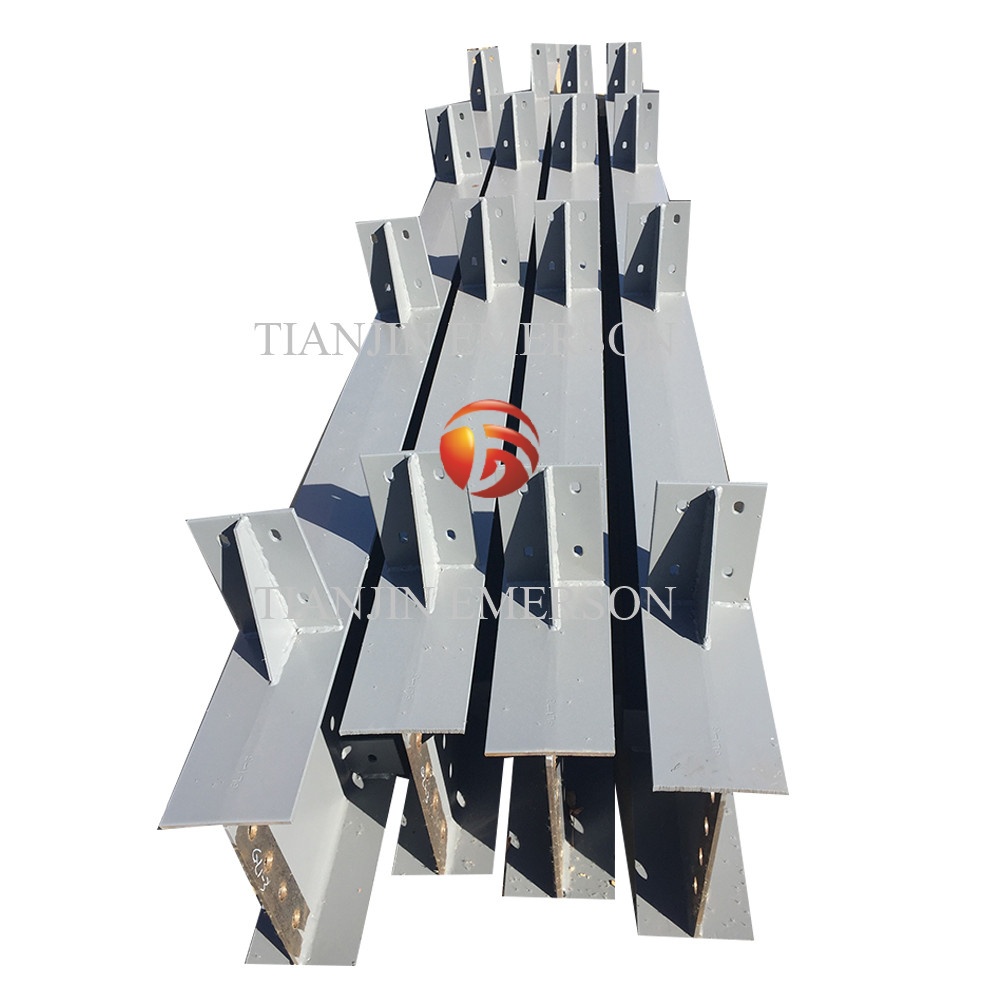
Off-the-shelf structural steel bridge parts offer distinct advantages. They compete directly against fully bespoke components. Standardized girders, trusses, and fasteners reduce lead times. They improve cost-efficiency significantly during procurement. Replacement parts arrive quickly when needed. Bespoke parts fit complex geometries perfectly. They require longer engineering and fabrication cycles. Facilities must weigh speed against specialized fitment. Modular sections allow for rapid assembly in predictable environments. You can bolt together standardized truss sections to span a drainage ditch in a single afternoon. Maintaining an inventory of standardized fasteners and connection plates ensures that routine maintenance or minor modifications can happen without waiting on custom fabrication runs.
| Component Type | Lead Time | Cost Efficiency | Best Application |
|---|---|---|---|
| Standardized Parts | Short (1-3 weeks) | High | Straight spans, standard load ratings, rapid deployment |
| Modular Sections | Medium (4-8 weeks) | Medium | Rapid assembly, predictable environments, temporary crossings |
| Bespoke Components | Long (10+ weeks) | Low | Complex geometries, extreme custom loads, tight clearances |
Industrial environments demand specific steel grades to survive harsh conditions. Weathering steel forms a protective rust patina naturally, eliminating the need for painting in many climates. High-strength low-alloy steel provides superior yield strength for heavy-duty applications. Harsh zones expose bridges to chemicals and high moisture constantly. Extreme temperatures test material limits. Protective coatings prevent rapid structural degradation. Galvanization techniques shield steel from corrosive attacks. Proper material selection ensures long-term durability. Engineers specify coatings based on local atmospheric conditions.
Selecting the right combination of base material and protective coating dictates the maintenance schedule for the next fifty years. A bridge located near a chemical processing unit requires a three-part epoxy and polyurethane coating system to resist acidic vapors effectively.
Complex site geometries require custom bridge steel fabrication. Standard parts cannot navigate dense pipeline networks. Uneven terrain demands tailored support structures. Integrating new bridges with existing buildings takes precision. Engineers collaborate closely with facility managers. They translate facility blueprints into precise fabrication models using advanced 3D software. Advanced modeling ensures exact fitment before delivery. This prevents costly on-site modifications. Custom fabrication solves spatial problems standard designs cannot. We frequently design skewed bridge decks to align with existing road networks inside the plant perimeter. This custom approach ensures smooth turning radii for long flatbed trailers. By utilizing 3D laser scanning of the existing facility, fabricators can model the new steel structure to weave perfectly between existing cooling towers, exhaust stacks, and utility racks.
Steel structures offer unmatched adaptability. Concrete resists modification once poured and cured. Steel components accept reinforcements easily. You can splice new sections into existing frames. Adding cross-bracing increases load capacity rapidly. Production scales often introduce heavier equipment. Steel adapts to these new live loadings. You avoid replacing the entire structure entirely. This future-proofing protects your initial infrastructure investment. If a facility upgrades its forklift fleet to higher-capacity models, engineers simply weld additional stiffener plates to the existing steel girders. This upgrades the bridge's load rating in a matter of days. You can also bolt on external post-tensioning systems to steel beams to increase their moment capacity without disrupting the deck above.
Upfront costs include material pricing, fabrication, and transport. Steel materials may cost more than raw concrete initially. However, reduced superstructure weight changes the math. You need smaller, less expensive construction equipment. Foundation requirements shrink significantly. This offsets initial material costs. Long-term financial benefits emerge quickly. Faster construction means massive labor savings. Facilities resume full production capacity much earlier. The rapid return on investment justifies the upfront expenditure. When evaluating the financial impact, factor in the revenue saved by avoiding a two-month plant shutdown. Steel allows you to keep the factory running while the bridge is built off-site. The ability to depreciate the asset over a long, predictable lifespan makes steel a highly favorable choice for industrial capital planning.
Steel requires objective maintenance planning. Periodic inspections check for fatigue and coating integrity. Harsh environments accelerate wear on protective layers. Touch-up painting prevents localized corrosion effectively. Compare this to concrete maintenance realities. High-vibration settings cause concrete spalling and cracking. Curing issues lead to deep structural flaws. Steel maintenance is predictable and localized. You repair specific sections without closing the entire bridge. Non-destructive testing methods, like ultrasonic inspection, allow engineers to verify weld integrity without disrupting traffic. This proactive maintenance approach extends the structure's usable life indefinitely. Magnetic particle testing quickly identifies surface micro-fractures before they propagate, allowing maintenance crews to grind and re-weld the affected area during a standard weekend shift.
Steel procurement bottlenecks risk project delays. Fabrication backlogs stretch timelines unexpectedly. Early contractor involvement mitigates these risks. Secure mill orders well in advance. Utilize domestic fabrication partners whenever possible. This shortens supply chains drastically. Clear communication keeps fabrication on schedule. Regular progress checks prevent last-minute surprises. Material availability dictates the entire project pace. We recommend locking in steel prices and securing production slots at the fabrication shop before finalizing the foundation designs. By ordering the raw steel plates and beams early based on preliminary tonnage estimates, you insulate the project from sudden market shortages.
Maneuvering heavy steel components challenges active sites. Congested industrial zones leave little room for error. Phased delivery schedules prevent site overcrowding. Utilize appropriately sized heavy-lift cranes. Steel's lighter weight allows flexible crane positioning. Schedule critical lifts during off-peak hours. Planned facility turnarounds provide ideal installation windows. Detailed rigging plans ensure safe component placement. Logistics planning prevents operational clashes.
Proper site preparation includes verifying the soil bearing pressure where the cranes will sit. A tandem lift involving two cranes requires perfectly synchronized movements, which demands a cleared, level staging area adjacent to the bridge abutments.
A: A steel bridge easily lasts 75 to 100 years or more. This depends on proper coating applications and routine maintenance. Environmental exposure dictates the inspection frequency. High-quality galvanization or epoxy coatings significantly extend this lifespan in harsh industrial zones by preventing moisture and chemical intrusion.
A: Custom detailing and fabrication add upfront time to the project schedule. However, this off-site manufacturing drastically reduces on-site assembly time. The precise fitment eliminates field modifications, allowing facilities to resume operations much faster than traditional construction methods. The overall project duration is often shorter.
A: Yes, steel members can be strengthened easily. Engineers add cross-bracing or weld additional steel plates to existing frames. This accommodates new live loadings without replacing the entire structure. Steel's adaptability makes it ideal for scaling industrial production and supporting heavier modern equipment.
A: Weathering steel performs well in many environments. For direct chemical exposure, high-performance carbon steels paired with zinc-rich polyurethane or epoxy coatings are best. These multi-layer systems create a durable barrier against corrosive industrial agents, protecting the structural integrity of the bridge.
A: Steel possesses a high strength-to-weight ratio. This results in significantly lighter superstructures compared to concrete. The reduced weight lowers foundation requirements, cuts excavation costs, and allows contractors to use smaller, more flexible construction equipment on site during the installation process.
A: Yes. Properly engineered steel bridges are rigid and feature low-deflection characteristics. They support the precise tolerances required by automated guided vehicles and heavy conveyor systems. The smooth, stable surface ensures uninterrupted automated logistics across the facility footprint.
A: Steel exhibits excellent ductility. It absorbs physical impacts and dynamic disturbances superiorly. It dissipates high-frequency vibrations from heavy machinery without cracking. Traditional concrete often suffers from fatigue and spalling under similar continuous dynamic stress, making steel the safer long-term choice.
