304/304L stainless steel sheets are the most common austenitic stainless steels, containing approximately 18% chromium and 8% nickel. They are non-magnetic, highly corrosion-resistant, and exhibit excellent formability and weldability. The 304L grade further reduces carbon content to ≤0.03%, enhancing resistance to intergranular corrosion and making it suitable for welding large components. Both grades are widely used in food processing, chemical engineering, pharmaceuticals, and architectural decoration due to their moderate pricing. They are commonly referred to within the industry as "universal stainless steel."
Common size on stock, Special sizes needs new production.Can cut to Size, cut to Shape.
The 304/304L stainless steel plate is indeed a popular choice in various industries due to its balanced combination of properties. Its composition of approximately 18% chromium and 8% nickel provides excellent corrosion resistance, making it suitable for environments that are prone to rust and corrosion. The austenitic structure of this stainless steel makes it non-magnetic and gives it excellent formability and weldability, which is crucial for manufacturing and fabrication processes.
The 304L variant, with its lower carbon content (≤0.03%), is particularly advantageous when it comes to welding applications. This reduced carbon content minimizes the risk of intergranular corrosion, which can occur in the heat-affected zones of welds. This makes 304L an ideal choice for welding large components or when post-weld annealing is not possible.
Both 304 and 304L are extensively used across various sectors. In the food industry, they ensure hygiene and prevent contamination. In the chemical and pharmaceutical industries, their resistance to corrosive chemicals is highly valued. Additionally, their aesthetic appeal and durability make them popular in architectural decoration.
The term "universal stainless steel" aptly describes these grades because of their versatility and moderate cost, which allow them to be used in a wide range of applications without compromising on quality or performance.
Common size on stock,3days;Special sizes needs new production.
Application
Building decoration materials, kitchen equipment and tableware, automotive components, medical devices, chemical equipment requiring welding, nuclear power plant equipment, and pipeline systems with high purity requirements.
Key Features & Highlights
10mm thickness for rigidity: less vibration during cutting and handling, better alignment for fixtures and assemblies.
Broad size capability: wide width range and cut-to-length support for both standard and project-based sourcing.
Finish options that match use-case: from brushed/HL for touchpoints to mirror/8K for display surfaces.
Process-ready edges: optimized cutting parameters help deliver edges that are easier to assemble, weld, or finish.
Multi-step fabrication support: laser cutting + waterjet + punching + bending + welding lets you purchase “ready-to-build” parts instead of raw plate only.
B2B-friendly lead time model: common sizes move quickly; special sizes follow production scheduling so projects can be planned realistically.
Material & Standards
304 stainless steel is widely used because it offers a strong balance: corrosion resistance, strength, and versatility across industries. For fabrication-heavy projects—frames, brackets, machine guards, structural plates—304 is often the practical choice because it’s familiar to most workshops and integrates smoothly into existing processes. If your project needs improved weldability or reduced risk of sensitization in thicker sections, 304L (low carbon) is commonly preferred.
For B2B procurement, “material” is also about documentation and consistency. When requested, your order can be aligned with the specification language you already use internally: grade designation, thickness, and finish callouts that match your drawings and purchasing standards. That means fewer back-and-forth emails, fewer surprises at receiving, and fewer arguments between
304 304L Grade Chemical Composition and Technical Property
Chemical Composition:
Grade
C % max
Si max
Mn max
P max
S max
Cr
Ni
304
0.08
1.00
2.00
0.045
0.030
18.0-20.0
8.0-10.5
304L
0.03
1.00
2.00
0.045
0.03
18.0-20.0
8.0-10.5
Technical Property
Grade
tensile strength(MPa)
yield strength(MPa)
Elongation%
304
≥520 MPa
≥205 MPa
≥40%
304L
≥480 MPa
≥175 MPa
≥40%
Advantages and Applications of 304 and 304L Grade Stainless Steel Sheets
304 stainless steel sheet:
Tensile strength:505–520 MPa, yield strength: 215 MPa, 20–40 MPa higher than 304L, with relatively high strength. Suitable for applications requiring “thin-walled lightweighting” such as architectural structural components, automotive exhaust systems, and load-bearing supports.
Elongation: 40–60%. Resists cracking during deep drawing, bending, and spinning, offering excellent formability. Suitable for complex deep-drawn components such as kitchen sinks, elevator panels, washing machine drums, and appliance housings.
High surface quality, polishable to a mirror finish with Ra ≤ 0.1 µm, and excellent gloss retention. Suitable for architectural cladding, curtain walls, elevator cabins, display cases, signage, and similar applications.
Meets food-grade safety standards. Suitable for food processing countertops, milk storage tanks, beverage conveyor belts, commercial kitchen equipment, and more.
304L stainless steel sheet:
Excellent resistance to intergranular corrosion. Suitable for large-scale equipment requiring “on-site welding without heat treatment,” such as chemical storage tanks, pulp towers, nuclear power capacitors, and sewage treatment tanks.
Excellent weldability, suitable for all welding methods. Applicable to pressure vessel shells, pipe circumferential welds, plate heat exchanger frames, modular sectional structures, and similar applications.
High toughness at low temperatures, with impact energy ≥60 J at -196°C, preventing low-temperature brittle fracture. Suitable for LNG carrier tank linings, liquid nitrogen tank outer shells, and polar platform enclosure systems.
High purity. Suitable for semiconductor ultra-pure pipelines, water for injection systems, high-purity chemical containers, etc.
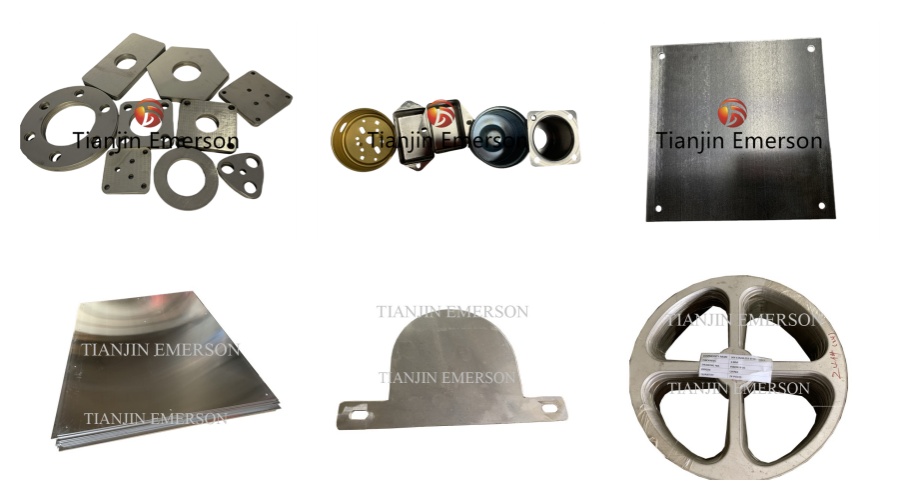
Sheet Metal Fabrication Parts
we can do carbon steel,stainless steel and alumnium plate laser cutting bending welding tapping and other sheet metal fabrication.
FAQ
Q: What exactly is the difference between 304 and 304L?
A: The main difference lies in their carbon content. 304 has ≤0.08% C, while 304L has ≤0.03% C.
Q: In which scenarios must 304L be selected?
A: ① On-site extensive welding where post-weld solution treatment is unfeasible; ② Media containing organic acids such as acetic acid or lactic acid; ③ Cryogenic (-196°C) LNG or liquid nitrogen containers; ④ Equipment in nuclear power, pharmaceutical, or semiconductor industries sensitive to intergranular corrosion.
Q: For standard decorative curtain walls and kitchen countertops, should 304 or 304L be used?
A: 304. 304 offers higher strength and lower cost, with surface polishing quality indistinguishable from 304L.
Q: Can 304/304L stainless steel “rust”?
A: It does not rust in normal atmospheric conditions, fresh water, or weak acids and alkalis. If used in seawater for extended periods, it requires regular rinsing.
Q: How to extend service life?
A: ① Remove residual adhesive from protective film after installation;
② Brush and passivate welds;
③ Rinse with fresh water periodically outdoors to prevent long-term chloride ion accumulation;
④ In coastal high-chloride environments, prioritize 316L stainless steel or coated protection.