Improving workflow in your sheet metal shop for higher productivity starts with optimizing equipment, employees, and processes. You face daily challenges that slow progress, such as skilled labor shortages, cost fluctuations, and complex project requirements. Regular workflow review helps you spot areas for improvement and adapt quickly. Even a small change, like better tool organization or updated software, can deliver measurable results. Focus both on technology and shop floor organization to see the biggest gains.
Common obstacles include:
Difficulty finding and retaining skilled labor
Fluctuating material costs
Pressure to meet tighter deadlines and higher quality standards
Adapting to advanced fabrication technologies
By making targeted improvements, your shop can overcome these barriers and achieve real gains in productivity. Sheet Metal Fabrication Shop: Tips for Improving Productivity often emphasize that consistent, incremental workflow changes lead to lasting success.
Assess Workflow Regularly
Regular assessment of your workflow is the foundation for lasting operational improvement in your sheet metal shop. Leading shops do not wait for problems to appear. Instead, they monitor and adjust their processes every day. This approach helps you spot inefficiencies, correct errors instantly, and keep productivity high.
Map Processes
Identify Steps
Start by mapping out every step in your production process. Lean manufacturing principles, especially Value Stream Mapping, work well for this task. Value Stream Mapping lets you see each stage clearly, from raw material intake to finished product delivery. You can pinpoint where non-value-adding activities slow you down. Understanding your current workflow in detail gives you the insight needed for targeted improvement.
Document Flows
Documenting your process flows creates a visual guide for your team. Use diagrams or flowcharts to show how materials, information, and tasks move through your shop. This documentation helps everyone understand their roles and responsibilities. It also makes it easier to spot unnecessary steps or repeated tasks that waste time.
Find Bottlenecks
Analyze Data
Collect real-time data on your workflow performance. Top-performing shops use advanced software tools to track progress daily. Look for patterns such as machine idling, long setup times, or frequent material handling delays. These issues often signal bottlenecks that hurt productivity. Automation and better scheduling can help you address these problems quickly.
Observe Shop Floor
Spend time on the shop floor to see how work actually flows. Watch for manual part sorting, operator fatigue, or crowded work areas. These common bottlenecks cause production delays and increase labor demands. By observing firsthand, you can identify where improvement is most needed.
Tip: Continuous, real-time workflow assessment—rather than periodic reviews—lets you catch and fix problems before they grow.
Gather Team Input
Your team holds valuable knowledge about daily operations. Involve supervisors, operators, and even sales staff in process mapping sessions. Encourage open feedback by fostering a zero-blame culture. Team collaboration uncovers hidden inefficiencies and leads to practical solutions. When everyone participates, you gain a clearer picture of the workflow and can develop actionable plans for improvement.
Select a diverse team for mapping sessions.
Promote honest feedback and open discussion.
Use team insights to create future state maps and drive operational improvement.
Regular, collaborative workflow assessment ensures your shop stays agile and productive.
Shop Layout and Organization
A well-organized shop floor sets the foundation for higher productivity and better resource utilization. You can reduce waste, improve efficiency, and create a safer work environment by applying proven strategies like the 5S method, visual management, and smart layout optimization.
5S Method
The 5S method, developed from the Toyota Production System, helps you eliminate waste and streamline your shop. This approach focuses on organizing the workspace to minimize time spent searching for tools and materials, which leads to significant productivity gains. Many metal fabrication shops worldwide use the 5S method to create orderly, efficient, and safe environments.
Sort and Set in Order
Start by sorting through all items in your shop. Remove unnecessary materials and catalog your inventory. This step reduces time lost searching for components and prevents downtime. Next, set everything in order. Organize tools and workstations so your team can move quickly and smoothly between tasks. When you arrange tools logically, you speed up workflow and reduce errors.
Standardize and Sustain
Standardize your processes to ensure everyone follows the same steps. Create clear instructions and train your team to maintain consistency. Regular audits help you sustain these improvements. The 5S method relies on ongoing commitment—when you stick to it, you preserve gains in organization and efficiency. Studies show that 5S audits increase productivity, reduce waste, and improve safety. They also help you meet OSHA and ISO 9001 standards.
Tip: The 5S method is not a one-time project. Make it a daily habit to see lasting results.
Visual Management
Visual management tools make your shop floor easier to navigate and help your team avoid mistakes. Use labels, markings, and boards to create transparency and real-time understanding of your work environment. This approach reduces errors and boosts efficiency.
Labels and Markings
Apply clear labels and floor markings to identify work zones, storage areas, and safety paths. Standardized symbols and annotations ensure everyone understands requirements, which lowers assembly errors and speeds up production.
Tool Storage
Designate specific places for every tool. Use shadow boards or color-coded racks so your team can find and return tools quickly. This system supports the 5S method and keeps your workspace organized.
Layout Optimization
Optimizing your shop layout reduces material handling time and increases utilization of both space and equipment. Arrange workstations to minimize travel distance for materials and workers. Lean manufacturing principles guide you to eliminate unnecessary movement and streamline processes.
Equipment Placement
Place machines and workbenches in a logical sequence that matches your workflow. Use custom carts and flow racks to move materials efficiently. Avoid standard carts that cause damage or slow down handling.
Ergonomics
Design workstations to reduce strain and fatigue. Adjustable tables, anti-fatigue mats, and proper lighting help your team work comfortably and safely. Good ergonomics lead to fewer injuries and higher productivity.
Note: When you combine the 5S method, visual management, and smart layout, you maximize shop floor utilization and create a foundation for continuous improvement.
Step-by-Step Process Optimization
Optimizing your sheet metal shop requires a step-by-step process that examines each stage of fabrication. By focusing on material selection, cutting, and forming, you can drive productivity, reduce waste, and achieve optimized production. Let’s break down how you can improve each phase for better results.
Material Selection
Choosing the right material sets the foundation for every project. You need to balance cost, availability, and performance. If you select materials that are difficult to bend or shape, you risk slowdowns and increased scrap. Metals with poor heat resistance can warp or deform during fabrication, which leads to more rework and wasted time.
A smart approach to material selection includes:
Evaluate the strength, corrosion resistance, and wear properties of each material.
Match material width and thickness to your part size. For example, coil-fed metal that matches part dimensions can reduce scrap from 15.9% to as low as 2-3%.
Work closely with suppliers to ensure consistent quality and timely delivery.
Use CAD software with material libraries to standardize choices and avoid errors during design and prototyping.
Tip: The right material choice improves production speed and minimizes waste, which directly boosts productivity.
Cutting
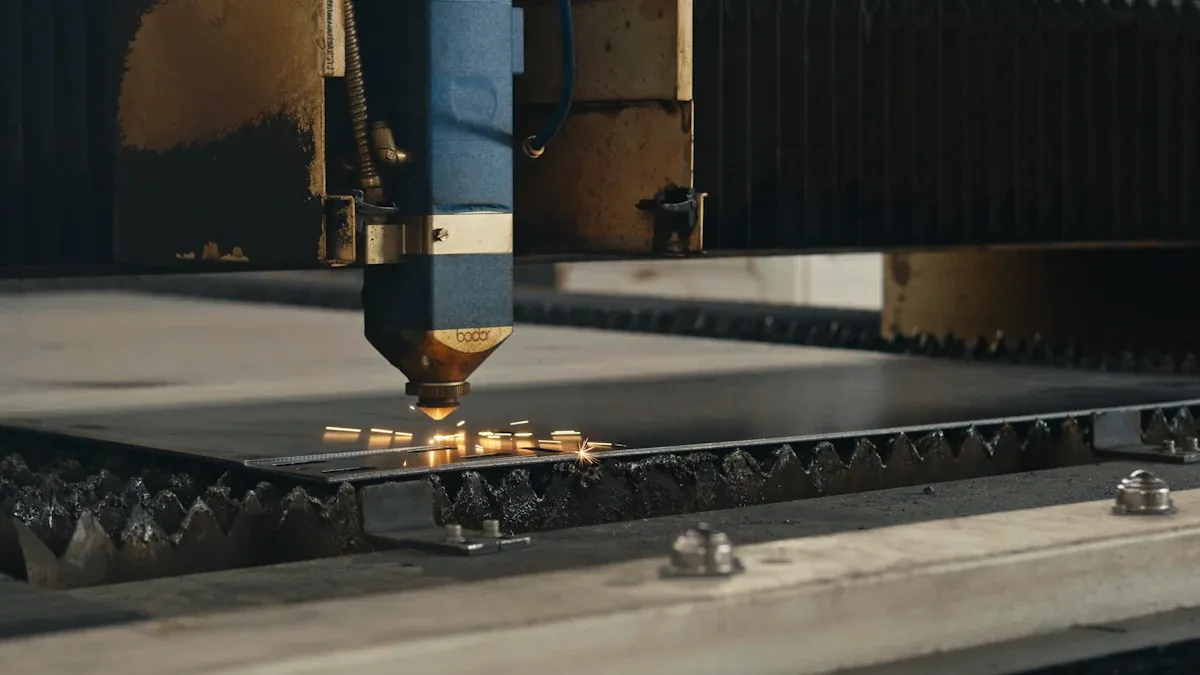
Cutting is a critical step that shapes your raw material into workable pieces. The right cutting methods can make a big difference in throughput and quality. Fiber laser cutting technology stands out for its speed and precision. Fiber lasers cut faster than CO2 lasers and require less maintenance, which means you can produce more parts in less time.
You can further increase productivity by integrating automation into your cutting process. Automated part sorting and material handling systems keep machines running without interruption. For example, a fiber laser with an automated tower can load and unload sheets continuously, even overnight. This setup reduces manual labor and prevents bottlenecks.
Metric | Description |
Yield Rate | Percentage of defect-free products produced without rework, indicating material efficiency and quality consistency. |
Scrap Rate | Percentage of unusable or defective products generated, reflecting waste and process inefficiencies. |
Throughput | Volume of products produced in a given time, measuring production capacity and efficiency. |
Cycle Time | Time taken to complete one production cycle, indicating speed and bottlenecks in the process. |
Tracking these metrics helps you measure the impact of your production optimization efforts. Modern shop floor management software (MES) and ERP systems can automate data collection and analysis, making it easier to identify areas for improvement.
Forming
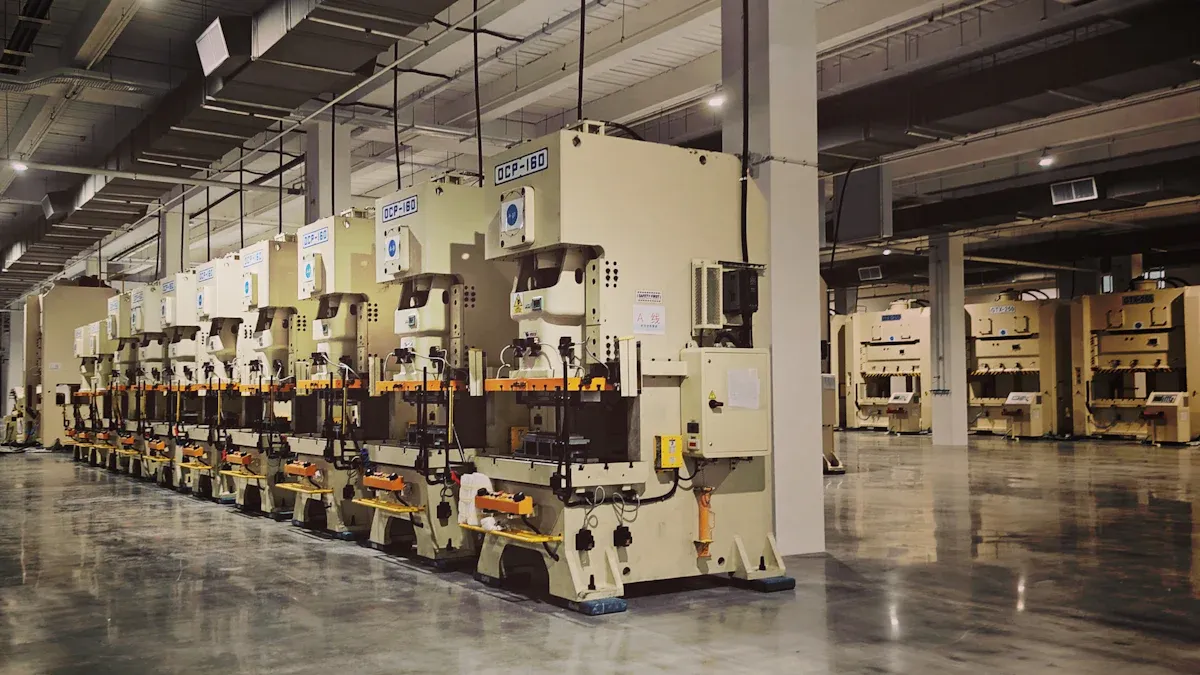
Bending and forming transform flat metal into complex shapes. You need to use the right equipment and techniques to maintain accuracy and efficiency. Advanced press brakes and CNC forming machines allow you to achieve precise bends with minimal setup time. Automation in bending and forming, such as robotic arms or programmable backgauges, increases consistency and reduces labor costs.
To optimize this stage:
Standardize tooling and setup procedures to minimize changeover time.
Train your team on best practices for bending and forming, including safety and quality checks.
Use real-time monitoring to catch errors early and reduce rework.
Note: Investing in worker skill development and upgrading equipment for bending and forming will help you maintain high productivity and quality.
By reviewing each step in your process and applying targeted improvements, you create a workflow that supports optimized production and continuous growth. Automation, smart material choices, and advanced cutting methods all play a role in your shop’s success.
Assembling
You drive productivity in your sheet metal shop by focusing on a precise and efficient assembly process. The assembly stage brings together all fabricated components, and even small errors can lead to costly rework or delays. To streamline this phase, you need a structured approach that emphasizes accuracy, consistency, and clear communication.
Maintain detailed Standard Operating Procedures (SOPs) for every step. SOPs ensure your team follows the same process each time, which reduces errors and keeps quality high.
Provide regular training on the latest assembly techniques and tools. Well-trained employees work faster and make fewer mistakes.
Use nesting software to optimize material usage. This software can reduce waste by up to 20% and improve cutting efficiency, which supports smoother assembly.
Monitor inventory in real time with IoT solutions. Real-time tracking prevents shortages or substitutions that often cause rework.
Plan for post-processing early in the design phase. When you coordinate finishing requirements with vendors from the start, you avoid delays and errors later.
You can further enhance productivity by leveraging advanced tools and technologies. CAD software, CNC machining, and robotic welding and assembly systems help you achieve precise fits and strong joints. Quality control systems, such as laser measurement and 3D scanning, catch defects before they reach the next stage. Careful management of tolerances ensures that each component fits perfectly, reducing the need for adjustments.
A successful step-by-step process for assembly includes component fabrication, quality checks, precise joining, finishing, and final inspection. When you implement these strategies, you minimize rework and deliver high-quality products on time.
Tip: Encourage your team to share feedback on assembly challenges. Their insights often reveal hidden inefficiencies and lead to practical improvements.
Sheet Metal Fabrication Shop: Tips for Improving Productivity
Boosting productivity in your sheet metal fabrication shop: tips for improving productivity often start with adopting lean operating models. You can transform your workflow by focusing on eliminating waste, standardizing processes, and using digital tools for quality control and automation.
Lean Manufacturing
Lean principles help you streamline every aspect of your operation. You reduce waste, improve flow, and create a safer, more efficient workplace.
Eliminate Waste
You can apply the 5S system to organize your shop and remove clutter. Many shops, such as CAMM Metals, use 5S to sort, set in order, shine, standardize, and sustain. This approach leads to better profitability, higher efficiency, and improved service. You also benefit from a safer environment. Lean manufacturing encourages you to identify and remove non-value-added steps, which tightens your workflow and increases productivity.
Sort: Remove unnecessary items.
Set in order: Arrange tools and materials logically.
Shine: Clean and maintain equipment.
Standardize: Create consistent work processes.
Sustain: Maintain these practices daily.
Pull Systems
You can implement pull systems to let customer demand drive production. This method reduces overproduction and inventory waste. By sequencing value-creating steps and using cellular manufacturing, you keep your workflow tight and responsive. Lean operating models also encourage you to focus on continuous improvement, aiming for perfect processes with no waste.
SOPs
Standard operating procedures (SOPs) form the backbone of a standardized process. You ensure every team member follows the same steps, which leads to consistent product quality and fewer errors. SOPs streamline your workflow, minimize waste, and support safety protocols. They also serve as a valuable training resource, helping new employees learn quickly and maintain high standards. Regularly updating SOPs aligns with lean principles and keeps your shop running smoothly.
Tip: Use SOPs to empower your team and align tasks with their strengths. This approach improves metal fabrication productivity and supports continuous improvement.
Quality Control
Quality control measures protect your reputation and reduce costly rework. You need clear standards, effective inspection protocols, and the right technology.
Inspection Software
Digital inspection tools and AI-driven systems now outperform manual checks. For example, AI inspection software can detect defects with 99% accuracy and cut inspection time from one minute to just over two seconds. You gain real-time feedback, higher accuracy, and significant cost savings. Integrating inspection software with automation ensures you catch errors early and maintain high quality throughout your workflow.
Standard Checks
You should define quality standards based on industry norms and client needs. Map your processes to identify critical control points. Develop inspection protocols for each stage, from raw material checks to final product reviews. Use advanced tools like coordinate measuring machines, optical systems, and statistical process control to monitor quality. Keep detailed records and review them regularly to drive continuous improvement.
Quality Control Measure | Description and Effectiveness |
Inspection Techniques | Use CMMs, optical profilometry, and NDT for early defect detection. |
Testing Procedures | Identify splits, wrinkles, and tears to ensure specifications are met. |
Real-time Monitoring | Track processes and document results for traceability and quick response to issues. |
Optical and Vision Systems | Employ automated cameras and sensors for instant defect detection. |
By combining lean techniques, SOPs, and advanced quality control, you create a sheet metal fabrication shop: tips for improving productivity that deliver real results. Automation and digital tools help you standardize processes, reduce errors, and keep your workflow efficient.
Technology and Digital Tools
ERP Systems
You can transform your sheet metal shop by implementing ERP systems. These platforms automate tasks such as order intake, invoicing, and inventory management. Automation reduces manual errors and allows your team to focus on higher-value activities. ERP software gives you real-time insights into material usage, machine status, and employee productivity. With this information, you can spot inefficiencies and bottlenecks quickly.
Modern ERP systems help you plan production and control inventory more effectively. You can increase output without hiring more staff. This approach supports business growth while keeping costs under control. For example, companies like Elsum Engineering have used ERP to gain stability and agility. They manage complex production requirements and deliver projects on time. ERP systems also centralize data, making it easier for departments to collaborate and make informed decisions.
You can track critical metrics such as capacity utilization, schedule adherence, and machine uptime. Monitoring these numbers helps you optimize resources, reduce rework, and improve scheduling. As a result, you enhance your overall workflow and boost shop floor efficiency.
IIoT and Real-Time Tracking
Industrial Internet of Things (IIoT) devices and sensors give you accurate, real-time data from your machines. You no longer need to rely on manual data collection, which often leads to delays and mistakes. Real-time monitoring lets you track machine performance, production rates, and equipment conditions at any moment.
IIoT integration with Manufacturing Execution Systems (MES) and Manufacturing Operations Management (MOM) provides a complete view of your production activities.
You can identify bottlenecks and inefficiencies as soon as they appear.
Dashboards and analytics turn raw data into actionable insights for managers and operators.
A metal-forming company that combined MES with MOM saw a 20% increase in throughput and a 15% drop in scrap rates. IIoT-powered automation also supports sustainability and agility, helping you maintain responsible production practices.
Tip: Use IIoT dashboards to spot problems early and schedule predictive maintenance before breakdowns occur.
Mobile Apps
Mobile apps give you powerful tools for managing your shop floor from anywhere. You can enter fittings, verify field work, and track parts as they move through the shop and into the field. This connectivity removes the need for hand drawings and reduces communication errors.
Shop floor management apps act as digital command centers. They automate workflows, reduce cycle times, and minimize defects. Real-time dashboards and collaboration tools help your team stay aligned. Features like skill matrices and certification tracking ensure you assign the right people to each job.
A case study from Independent Rough Terrain Center LLC shows how mobile and low-code apps reduce wasted time. Workers no longer need to leave their stations to find help. Instead, they receive the right information at the right time. This approach streamlines communication, reduces human error, and improves operational efficiency.
Custom Toolbars
Custom toolbars in digital tools give you a powerful way to speed up your daily tasks in a sheet metal shop. You can set up these toolbars in your CAD or CAM software to group your most-used commands and macros. This setup helps you avoid searching through menus or remembering complex shortcuts. You work faster and make fewer mistakes.
When you use custom toolbars, you can automate repetitive design and documentation tasks. For example, you can create macros that generate standard drawing templates, flat patterns, or manufacturing documents with a single click. This automation reduces manual work and cuts down on errors. You spend less time on routine steps and more time on creative problem-solving or quality checks.
Custom toolbars and macros can reduce design and detailing efforts by over 80%. You see a big drop in task completion time and a boost in workflow efficiency.
Many shops have seen dramatic improvements after adding custom toolbars to their workflow. For instance, a sheet metal fabrication firm used SolidWorks macros to speed up DXF file generation. The process went from taking 5-7 minutes per part to just 2 minutes. This 70% reduction in lead time allowed the design team to focus on research and development instead of repetitive tasks.
You can expect several benefits when you implement custom toolbars:
Faster Task Completion: Automate common actions like drawing creation, pattern generation, and document export.
Consistency: Ensure every team member follows the same process, which improves quality and reduces training time.
Error Reduction: Minimize manual data entry and repetitive clicks, lowering the risk of mistakes.
Better Focus: Free up your team to work on complex projects and innovation, not just routine operations.
Benefit | Impact on Workflow |
Time Savings | Complete tasks in a fraction of the time |
Quality Improvement | Standardize outputs and reduce errors |
Employee Satisfaction | Reduce frustration from repetitive work |
Increased Productivity | Focus on value-added activities |
Tip: Review your most frequent tasks and set up custom toolbars or macros for them. Even small changes can lead to big gains in productivity.
Custom toolbars help you get the most out of your digital tools. You streamline your workflow, reduce waste, and keep your shop running at peak efficiency.
Equipment and Maintenance
Keeping your equipment in top condition is essential for high productivity in a sheet metal shop. Regular maintenance and timely upgrades help you maximize machine utilization, reduce downtime, and keep your workflow running smoothly.
Preventive Maintenance
You can prevent costly breakdowns and extend the life of your machines by following a structured preventive maintenance plan. Here are some best practices:
Conduct regular inspections to spot wear, misalignments, or stress on parts early.
Set up a maintenance schedule for servicing, cleaning, and replacing worn components.
Use predictive tools like vibration analysis and thermal imaging to detect faults before they cause failures.
Lubricate all moving parts to reduce friction and prevent rust.
Train your maintenance staff and keep detailed records of all maintenance activities.
Daily inspections help you catch issues before they become serious. Clean machines work more efficiently and last longer. Modular access systems, safety gates, and anti-slip platforms make maintenance safer and faster. Condition-based maintenance, using sensors to monitor vibration and temperature, lets you predict problems and schedule repairs at the right time. This approach reduces unplanned downtime and improves overall equipment utilization.
Equipment Upgrades
Upgrading your equipment can deliver significant productivity gains. When you move from single-spindle to multispindle drill lines with automation, you can increase processing speed by 30-50%. Advanced machines that combine drilling, tapping, and milling in one setup save time and reduce manual handling. Automatic tool changers and pass-through automation streamline your workflow and boost throughput.
Operator training is just as important as new machines. Well-trained staff use upgraded equipment more effectively, which leads to better job completion rates and fewer errors. Scheduled maintenance on new machines also extends their lifespan and keeps your shop running at peak efficiency. Equipment upgrades tailored to your production needs help you optimize utilization and stay competitive.
Downtime Reduction
Reducing unplanned downtime keeps your projects on schedule and your costs under control. You can achieve this by:
Implementing preventive maintenance plans to avoid unexpected breakdowns.
Using sensors and data analytics for real-time machine health monitoring.
Keeping detailed maintenance logs to track recurring issues.
Balancing workloads to prevent bottlenecks and idle time.
Training employees in lean practices and engaging them in continuous improvement.
Real-time dashboards and IoT-enabled machines give you instant feedback on performance. Tracking key performance indicators, such as machine downtime, helps you set goals and measure progress. When you focus on these strategies, you minimize downtime and maximize equipment utilization, leading to higher productivity and customer satisfaction.
Employees and Communication
Strong communication and engaged employees drive productivity in every sheet metal shop. You need clear processes, ongoing training, and a culture that values improvement. When you focus on team coordination, training, and continuous improvement, you build a foundation for lasting success.
Team Coordination
You can prevent delays and errors by making team coordination a daily priority. When your design, fabrication, and logistics teams work together, your workflow becomes smoother and more efficient. Real-time production tracking helps you spot slowdowns early. Lean manufacturing processes and contingency planning keep your projects on schedule.
Detailed scheduling and coordination between departments enable a seamless workflow.
Real-time updates and centralized information sharing through ERP systems help everyone stay informed.
Effective production planning and resource allocation reduce bottlenecks.
Addressing poor communication and language barriers avoids misunderstandings and mistakes.
For example, a mining infrastructure project finished ahead of schedule because of proactive planning and close coordination. In another case, an emergency fabrication request was prioritized and completed quickly, preventing operational disruption. These examples show that when you improve communication and teamwork, you optimize timelines and ensure on-time delivery.
Training
You boost productivity by investing in training programs that match your shop’s needs. Well-structured training reduces the learning curve and improves operator performance. Multi-modal training—using visual, auditory, and hands-on methods—leads to better quality and faster delivery.
Training Program / Approach | Measurable Productivity Improvements |
Fabricator Education Training Program | Reduces learning curve; improves operator performance |
Multi-modal training (visual, auditory, hands-on) | Better quality, faster delivery, higher revenue per operator, lower rework costs |
Specialized software modules | Enhances use of advanced features, improving daily workflows |
Hands-on onboarding and user-friendly systems build confidence and reduce resistance to change. Material waste tracking systems can cut waste by up to 40%. Improved coordination between BIM and the shop floor reduces rework and saves project costs. When you provide regular training, you empower your team to adapt quickly and maintain high standards.
Continuous Improvement
Continuous improvement keeps your shop competitive. You set clear, measurable goals and engage employees at every level. Use data and analytics to monitor key performance indicators and identify trends. Lean manufacturing principles help you eliminate waste and optimize workflows.
Set SMART goals for each area of your operation.
Involve your team in identifying problems and suggesting solutions.
Use real-time data to track progress and adjust strategies.
Invest in new technologies like automation and AI for process control.
Encourage innovation by rewarding new ideas and experimentation.
You sustain productivity gains by providing ongoing learning opportunities and fostering a culture of improvement. When you improve communication and encourage feedback, your team feels valued and motivated to contribute. Smart manufacturing technologies, such as cobots and vision systems, support lean practices and accelerate process improvement. By blending lean and automation, you overcome labor shortages and rising costs, ensuring your shop stays productive.
Tip: Hold daily meetings and set up suggestion programs to keep everyone engaged and focused on improvement.
You can transform your sheet metal shop by focusing on these key steps:
Assess your workflow regularly
Organize your shop floor with proven methods
Embrace technology and digital tools
Engage your team and encourage communication
Start with one improvement. Build momentum with small wins. Track your progress and celebrate every productivity gain. Consistent effort leads to lasting results in your shop.
FAQ
What is the most effective way to identify workflow bottlenecks in my sheet metal shop?
You should combine process mapping, real-time data analysis, and direct observation on the shop floor. Involve your team in discussions. This approach helps you spot delays, repetitive tasks, and inefficiencies quickly.
How often should I review and update my shop’s workflow processes?
Review your workflow at least once per quarter. Schedule additional reviews after major equipment upgrades or process changes. Frequent assessments help you adapt to new challenges and maintain high productivity.
Which digital tools provide the biggest productivity boost for sheet metal fabrication?
ERP systems, MES software, and IIoT sensors deliver the most impact. These tools automate scheduling, track inventory, and monitor machine performance. You gain real-time insights and reduce manual errors.
How can I reduce material waste during fabrication?
Use nesting software to optimize material layouts. Select materials that match your part dimensions. Train your team on best practices for cutting and handling. Track scrap rates and adjust processes based on data.
What training should I provide to improve employee performance?
Offer hands-on training for new equipment, safety protocols, and lean manufacturing principles. Use visual aids and regular refresher sessions. Well-trained employees work faster and make fewer mistakes.
How do I keep my equipment running at peak efficiency?
Follow a preventive maintenance schedule. Use sensors to monitor machine health. Train operators to spot early warning signs. Keep detailed maintenance records and address issues before they cause downtime.
Can small changes really make a difference in shop productivity?
Yes. Even minor improvements, like reorganizing tool storage or updating SOPs, can save time and reduce errors. Small changes add up, leading to significant productivity gains over time.
What is the best way to encourage continuous improvement among my team?
Hold daily meetings to discuss goals and challenges. Set up a suggestion program. Recognize and reward innovative ideas. Involve everyone in problem-solving to build a culture of ongoing improvement.