Purchasing industrial metals requires precision, foresight, and a deep understanding of material science. The decisions made during procurement directly impact structural integrity, product performance, and overall project margins. Whether you are an engineer designing load-bearing structures or a procurement officer sourcing high-volume materials, understanding the nuances of metal acquisition is critical. Navigating material options, vetting your supply chain, validating quality standards, and protecting shipments from transit defects are essential steps in a successful procurement strategy. This guide provides actionable insights into the procurement process for flat-rolled steel products. You will learn how to evaluate sourcing channels, specify exact material requirements, and implement rigorous receiving inspections. By mastering these elements, you can ensure that every piece of metal arriving at your facility meets strict engineering tolerances and performs flawlessly in its intended application.
- Navigating material options
- Vetting your steel sheet supplier
- Validating quality standards
- Protecting shipments from transit defects
Determining Sourcing Channels: Retailer vs. Supplier vs. Mill-Direct
Selecting the right sourcing channel depends entirely on your volume requirements, lead times, and customization needs. Procurement officers generally choose between local retailers, specialized distributors, and direct mill purchasing. Each channel serves a distinct purpose in the manufacturing ecosystem and requires a different approach to logistics and relationship management.
Evaluating Your Volume and Lead Time Requirements
Local retailers are ideal for immediate, low-volume, or prototype needs. They offer rapid availability but typically carry minimal customization options. When you need a few pieces of metal to test a design or complete a small repair, retail outlets provide the necessary speed. You walk in, select the standard sizes available on the rack, and transport the material yourself. This works well for maintenance departments or rapid prototyping shops where waiting weeks for a delivery is not an option.
For mid-to-high volume orders, partnering with a dedicated steel sheet supplier is usually the most efficient route. Distributors and service centers bridge the gap between massive mill production runs and end-user requirements. They offer custom processing options, reliable supply chain integration, and flexible delivery schedules. This channel is the sweet spot for most manufacturers who require steady material flow without the burden of storing massive inventories. A good supplier will hold inventory for you, releasing it on a just-in-time basis to keep your production lines moving without tying up your floor space.
Mill-direct sourcing is reserved for ultra-high-volume manufacturing and heavy industrial applications. Mills require high Minimum Order Quantities (MOQs) and often have lead times stretching into several months. However, buying direct offers the most streamlined material acquisition for standardized, massive-scale projects. When you are building ships, large storage tanks, or massive structural frameworks, dealing directly with the mill ensures you get the exact chemistry and dimensions required straight from the source.
| Sourcing Channel | Ideal Volume | Lead Time | Customization Capabilities |
| Local Retailer | Low (1-10 pieces) | Immediate (Same Day) | Minimal (Standard cuts only) |
| Service Center / Distributor | Medium to High | Days to Weeks | High (Laser, plasma, slitting, leveling) |
| Mill-Direct | Ultra-High (Full truckloads/railcars) | Months | Specific chemistry and rolling dimensions |
The Scale Shift
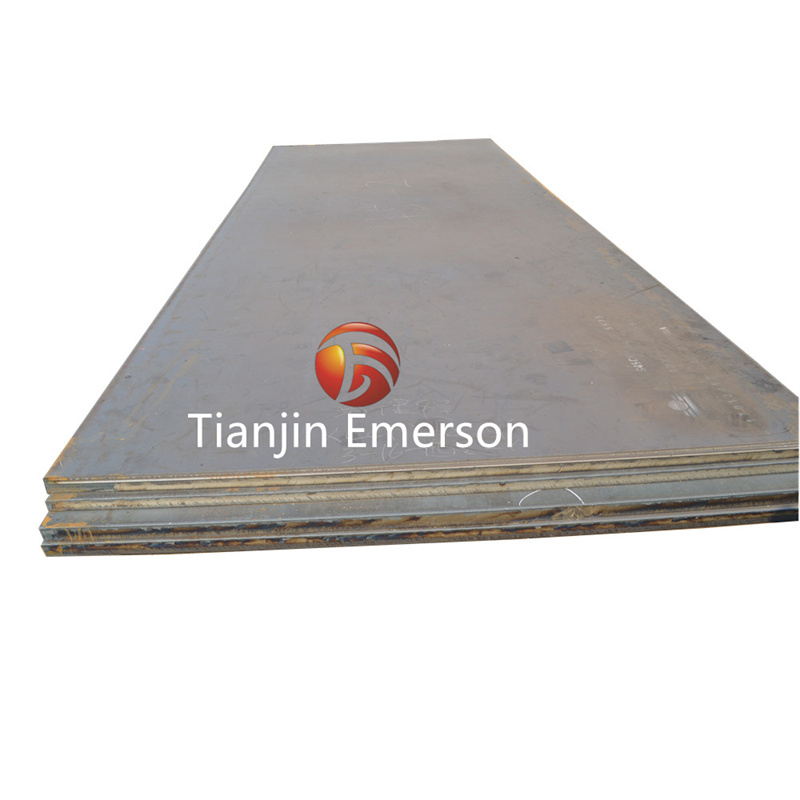
As project demands grow, you may need to transition from standard procurement to sourcing heavy industrial steel plate. This shift occurs when fabrications require load-bearing capabilities and thick-walled construction. Understanding when your structural requirements exceed the physical limits of standard gauges is crucial for maintaining safety and structural integrity. Plate material behaves differently during forming and welding than thinner gauges, requiring different handling equipment, higher amperage welding processes, and more robust cutting machinery.
Specifying Material Requirements: Grades, Standards, and Certifications
Ordering metal requires exact engineering specifications. Vague requests lead to material failures, production delays, and compromised safety. You must match alloy chemistry and mechanical properties precisely to the intended application. A simple request for a Steel Sheet is never enough; you must define the exact parameters of what that sheet needs to do.
Determining Precise Engineering Specifications
Different environments demand different material properties. Carbon steel offers excellent structural strength, while stainless variants provide essential corrosion resistance. Galvanized options are perfect for outdoor exposure, and high-strength low-alloy variants deliver superior strength-to-weight ratios. You must define the exact chemical composition required for your project. For example, if you are stamping parts, you need a highly formable drawing quality material. If you are building a bridge girder, you need high yield strength and specific impact toughness ratings.
You must also understand the structural threshold between different flat-rolled products. Differentiating sheet thickness, usually measured in gauges, from heavy plate is fundamental. Plate typically starts at 3/16 inch and thicker, designed for heavy structural applications rather than light fabrication. The manufacturing process also differs; thinner materials are often cold-rolled for tighter tolerances and better surface finish, while thicker plates are hot-rolled.
Verifying Regulatory and Structural Certifications
Compliance with international standards is non-negotiable. ASTM International standards dictate specific grades, such as ASTM A36 for structural carbon or A1008 for cold-rolled applications. Ensure your material explicitly complies with these designations. When you specify A36, you are guaranteeing a minimum yield strength of 36,000 psi, which allows your engineers to calculate load capacities accurately.
ISO certifications verify the quality management systems of your supply chain. ISO 9001 compliance guarantees material batch consistency and reliable operational processes. Always request Mill Test Reports (MTRs) before shipment. These documents verify the actual chemical composition and mechanical properties of the specific heat lot you are purchasing. An MTR will list the exact percentages of carbon, manganese, phosphorus, sulfur, and other alloying elements, proving the material matches your purchase order.
Vetting Supplier Reliability and Value-Added Services
Your supply chain is only as strong as its weakest link. Vetting potential partners requires a thorough audit of their market reputation, financial stability, and operational capabilities. You are not just buying metal; you are buying the assurance that it will arrive on time, in spec, and ready for production.
Verifying Supplier Credibility and Market Reputation
Audit potential partners for financial stability and on-time delivery rates. Industry reviews and references provide valuable insights into a company's reliability. Assess their responsiveness to fluctuating market trends and global supply chain disruptions. A reliable partner communicates proactively about potential delays and offers alternative solutions. Ask for their on-time delivery metrics and their defect rate. A supplier who tracks these KPIs is generally more reliable than one who does not.
Evaluating Processing and Customization Capabilities
Sourcing a custom steel sheet often requires in-house metalworking capabilities. Assess your partner's ability to perform shearing, laser cutting, plasma cutting, slitting, and leveling. Custom processing at the distribution level reduces scrap, shortens production cycles, and lowers downstream fabrication expenses. If your supplier can deliver blanks cut to your exact final dimensions, you eliminate an entire step in your manufacturing process, freeing up your own machinery and labor for more complex tasks.
Logistics, Shipping, and Protective Packaging
Smart logistics minimize transit damage and freight expenses. Optimize shipping freight classes by specifying how material should be cut and packed. Ensure adequate anti-corrosion protection for raw and cold-rolled finishes. Specify rust-inhibitive oils, VCI paper, and sturdy wood-skid framing to protect your investment during transit. Flat-rolled metal is highly susceptible to edge damage from forklift forks and surface rust from condensation during transport. Proper packaging is not an optional extra; it is a critical requirement.
Receiving Inspections and On-Site Material Validation
Quality control does not end when the truck arrives. Implementing a rigorous receiving inspection protocol prevents defective materials from entering your production line. Catching a problem at the receiving dock is vastly cheaper than discovering it after the metal has been welded into a final assembly.
Post-Delivery Physical Inspection Protocol
Establish a strict checklist for your receiving docks. Inspect every bundle upon delivery. Monitor closely for surface defects such as laminations, pitting, physical edge damage, scale, and early-stage corrosion like white or red rust. Laminations are particularly dangerous as they represent internal separations in the metal that can cause catastrophic failure under load. Train your receiving personnel to look for these specific visual cues before signing the bill of lading.
Dimensional Integrity Checks
Validate material thickness using calibrated micrometers. Check for flat tolerance, bowing, and cambers against allowable ASTM limits. Dimensional inaccuracies cause massive headaches during automated welding and forming operations. If a sheet is out of flat tolerance, it will not sit correctly in a CNC laser bed, leading to crashed cutting heads and ruined parts. Use a straightedge and feeler gauges to check flatness across the diagonal of the sheet.
On-Site Material Validation Techniques
When MTR documentation is missing or questionable, use simple on-site verification techniques. The hardness file test involves applying a standard machinist's file to a corner to gauge relative hardness. If the file bites easily, the material is softer; if it slips off, the material is hardened. This is a quick, qualitative check to ensure you haven't received a high-carbon plate when you ordered mild carbon.
For high-stakes alloy validation, utilize non-destructive testing (NDT) instruments. Positive material identification (PMI) guns provide instant chemical composition analysis, ensuring the metal matches your exact specifications. These handheld X-ray fluorescence (XRF) analyzers can tell you within seconds if a piece of metal is 304 or 316 stainless, preventing costly mix-ups on the shop floor.
The 4-Step Framework for Bulk Purchasing
Streamline your procurement process by following a structured, repeatable framework. This ensures consistency and mitigates risk across all purchasing activities. A standardized approach prevents details from slipping through the cracks when managing multiple large orders simultaneously.
- Establish Strict Technical Specifications. Document tolerances, surface finishes, chemical constraints, and mechanical properties clearly on all purchase orders. Never rely on verbal agreements for technical specs.
- Source and Compare Channels. Evaluate bids from multiple distributors and mills. Factor in logistics, processing capabilities, and realistic lead times. Look beyond the base material cost to the total landed cost.
- Negotiate Custom Processing and Delivery Terms. Standardize packaging requirements, specify custom cutting instructions, and clearly define freight accountability. Determine who owns the material while it is in transit.
- Implement a Rigid QA/QC Protocol. Establish formal inspection and rejection procedures for deliveries that fail to meet chemical, mechanical, or surface criteria. Make sure your suppliers know your inspection standards before they ship.
Conclusion
Successful procurement requires vigilance at every stage. Standardize your purchasing operations and protect your production lines by taking immediate action on your next order.
- Define exact grades, gauges, and mechanical properties before requesting quotes.
- Require MTRs for every heat lot prior to shipment authorization.
- Audit potential partners for ISO compliance and value-added processing capabilities.
- Equip receiving docks with calibrated micrometers and standardized inspection checklists.
FAQ
Q: What is the difference between sheet and plate metal?
A: The primary difference is thickness. Sheet metal is typically thinner, measured in gauges, and used for lighter fabrication. Plate metal is generally 3/16 inch or thicker and is utilized for heavy structural and load-bearing applications.
Q: Why are Mill Test Reports (MTRs) important?
A: MTRs verify the exact chemical composition and mechanical properties of the metal. They prove that the material meets the specified ASTM or international standards required for your engineering application.
Q: How can I protect cold-rolled metal during shipping?
A: Specify the use of rust-inhibitive oils, Volatile Corrosion Inhibitor (VCI) paper, and secure wood-skid framing. These measures prevent moisture accumulation and physical damage during transit.
Q: What is the hardness file test?
A: It is a quick, on-site validation technique. You drag a standard machinist's file across a corner of the metal. If it bites easily, the metal is relatively soft. If it glides off, the metal has higher hardness.
Q: When should I buy direct from a mill instead of a distributor?
A: Mill-direct purchasing is best for ultra-high-volume, standardized orders where you can meet high Minimum Order Quantities (MOQs) and accommodate lead times that stretch into several months.


