Optimizing material yield while maintaining structural integrity remains a persistent challenge in custom fabrication and high-volume component production. Engineers frequently face a direct decision: continue deep-hole drilling solid stock or transition to pre-formed tubular materials. Boring solid bars introduces massive inefficiencies on the shop floor. You deal with high tool wear, excessive swarf generation, and prolonged cycle times that tie up valuable CNC machinery. Conversely, sourcing precise hollow stock requires rigorous specification to ensure concentricity and mechanical performance align with project demands.
Selecting the appropriate Hollow Steel Bar involves a structured evaluation framework. Material grades, dimensional tolerances, and machining realities must be carefully analyzed to drive reliable outcomes. By understanding the metallurgical properties and dimensional constraints of available hollow stock, fabrication teams bypass heavy material removal processes. This approach reduces spindle loads and accelerates production schedules without compromising the final component's structural viability.
- Specifying hollow steel bar over solid stock significantly reduces machining time and tooling costs, provided concentricity and wall thickness tolerances align with project requirements.
- Material selection—ranging from carbon steel to 303, 304, and 316 stainless steel—dictates both the fabrication constraints and the long-term structural viability in harsh environments.
- Verifiable mill test reports (MTRs) and strict supply chain vetting are critical to mitigating risks related to internal stresses and metallurgical inconsistencies.
- Beyond machining, hollow bars offer unique design advantages in structural installation, self-drilling anchor systems, and custom forming operations.
Solid Stock vs. Hollow Round Bar: Framing the Engineering Problem
Success Criteria for Material Selection
Baseline requirements for custom engineering projects dictate the material selection process from the ground up. Weight reduction targets, load-bearing capacities, and cycle-time limits form the core success criteria for any fabrication run. When a component requires a central void, the initial material choice directly impacts every subsequent manufacturing phase. Engineers must evaluate whether the mechanical properties of a tubular section can meet the torsional and tensile demands originally designed for a bored solid bar. You cannot simply swap materials without running the structural calculations. The transition requires a thorough understanding of how the hollow profile behaves under dynamic loading conditions compared to a solid cross-section.
Material Yield and Waste Reduction
Volumetric waste presents a major operational burden when boring solid bar stock. Deep-hole drilling transforms valuable raw material into scrap metal, known as swarf, which requires handling, storage, and disposal. Utilizing a hollow round bar provides a near-net-shape advantage. By starting with a material profile that closely resembles the final part, manufacturers drastically reduce material waste and improve overall yield per purchased ton. This near-net-shape approach means you buy only the steel you actually need for the final component. The reduction in chip evacuation problems alone makes the switch worthwhile for deep-bore applications.
Tooling and Machine Wear
Bypassing the initial deep-hole drilling phase extends the lifespan of cutting tools and reduces machine wear across the board. Drilling solid steel generates immense heat and friction, requiring high coolant volumes and frequent tool replacements. Transitioning to hollow stock lowers spindle loads and minimizes the aggressive roughing operations typically required. This shift allows machine shops to allocate their high-performance CNC equipment to precision finishing rather than heavy material removal. You save on carbide inserts, drill bits, and machine maintenance. The spindle bearings experience far less axial load, extending the operational life of the entire machining center.
Weight-to-Strength Ratios
Tubular cross-sections offer superior structural efficiency in specific applications. In torsional and bending scenarios, the material furthest from the neutral axis handles the highest stress. Hollow bars distribute mass where it is most effective, providing excellent weight-to-strength ratios compared to solid equivalents. This characteristic proves vital in aerospace, automotive, and heavy machinery sectors where reducing dead weight is a primary design objective. A hollow shaft can transmit nearly the same torque as a solid shaft of the same outside diameter while weighing significantly less. This principle drives the design of modern drive shafts and structural columns.
Forming vs. Machining Flexibilities
Hollow round bars respond differently to secondary operations than solid bars. Cold and hot forming, bending, and flaring are highly achievable with tubular stock, offering design flexibility that solid bars cannot match without extensive machining. However, engineers must account for wall thinning and potential ovality during bending operations. Selecting the correct wall thickness and material grade ensures the hollow bar maintains its structural integrity during aggressive forming procedures. You must calculate the minimum bend radius carefully to prevent wrinkling on the inside radius or cracking on the outside radius. Proper mandrel bending techniques often become necessary for tight radii.
Material Grades and Specifications for Hollow Steel Bar
Carbon Steel Hollow Bars
Standard carbon grades deliver high strength, excellent weldability, and reliable performance. These attributes make carbon steel hollow bars a staple in heavy construction, automotive assemblies, and infrastructure projects. Grades such as 1020 and 1045 offer predictable machining characteristics and respond well to surface hardening treatments. They provide a robust foundation for components subjected to moderate stress and wear. When you need a balance of machinability and structural integrity, 1020 seamless mechanical tubing often serves as the default choice. For applications requiring higher surface hardness, 1045 allows for effective induction hardening after the final machining passes.
Stainless Steel Alloys (303, 304, 316)
Highly corrosive or clean environments demand the specific properties of stainless steel alloys. Grade 304 offers general corrosion resistance, while 316 includes molybdenum for enhanced protection against chlorides, making it ideal for marine and chemical processing applications. Grade 303 includes sulfur or selenium to improve machinability, though it sacrifices some corrosion resistance. These alloys dominate the semiconductor, aerospace, medical, energy, and electronics sectors. Machining stainless hollow bar requires rigid setups and sharp tooling to prevent work hardening. You must maintain consistent feed rates; dwelling in the cut will instantly work-harden the surface and destroy the insert.
Alloy and Specialty Steels
High-stress, high-wear custom engineering components often require heat-treatable alloys. Materials like 4140 and 8620 provide exceptional toughness and fatigue strength. These specialty steels can be quenched and tempered to achieve precise hardness levels. Utilizing alloy hollow bars for transmission shafts, hydraulic cylinders, and heavy-duty axles ensures the final components withstand extreme operational loads. 4140 chromoly steel, in particular, offers an excellent strength-to-weight ratio. When specifying these alloys, you must account for the dimensional changes that occur during the heat treatment process, leaving adequate stock for final grinding operations.
Section Profiles and Dimensions
Specification parameters for hollow stock extend beyond material grade. Outside Diameter (OD), Inside Diameter (ID), and wall thickness dictate the material's suitability for a project. While circular sections are most common, square and rectangular profiles serve specific structural needs. Accurate specification of OD and ID tolerances is critical for both small-scale precision parts and massive structural columns. You must understand the difference between nominal pipe sizes and exact mechanical tubing dimensions. Mechanical tubing is specified by exact OD and wall thickness, allowing for precise engineering calculations and tighter fits in mechanical assemblies.
| Material Category | Common Grades | Primary Characteristics | Typical Applications |
| Carbon Steel | 1020, 1045 | High strength, good weldability, predictable machining | Automotive parts, structural framing, heavy machinery |
| Stainless Steel | 303, 304, 316 | Corrosion resistance, cleanability, moderate strength | Medical devices, marine hardware, chemical processing |
| Alloy Steel | 4140, 8620 | High toughness, heat-treatable, fatigue resistant | Hydraulic cylinders, transmission shafts, axles |
| Micro-Alloyed | ST52, E355 | Excellent weldability, high yield strength as-rolled | Crane booms, agricultural equipment, fluid power |
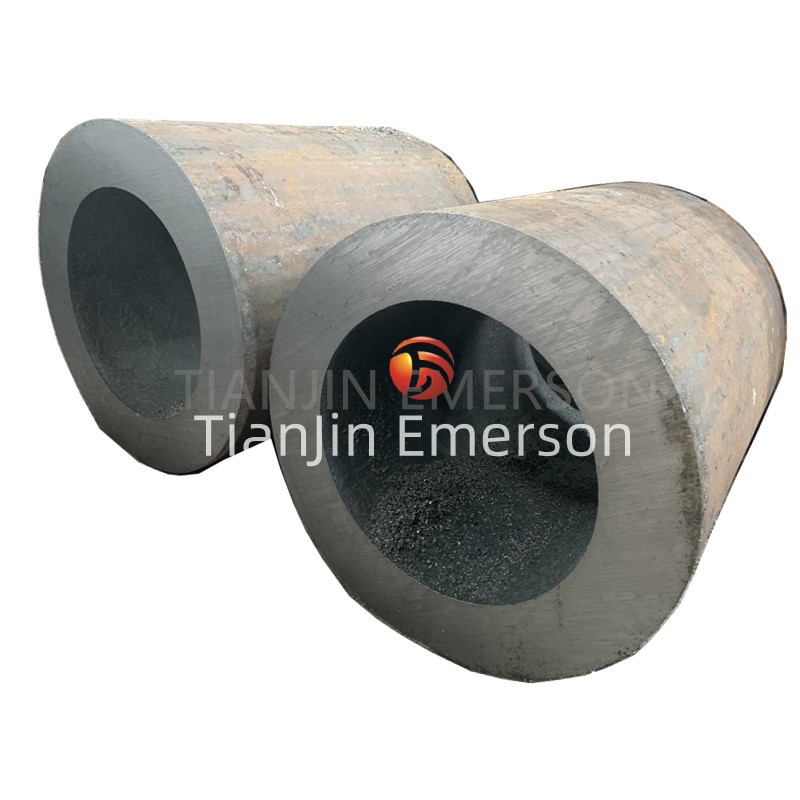
Machining Hollow Bar: Technical Evaluation Dimensions
Tooling Selection and Feed Rates
Successfully machining hollow bar requires precise control over cutting parameters. Turning, milling, boring, and threading operations must be calibrated to prevent chatter and wall deflection. Thin-walled hollow stock is particularly susceptible to vibration. Selecting rigid tooling, utilizing appropriate insert geometries, and adjusting feed rates based on the specific alloy and wall thickness ensures dimensional accuracy and extends tool life. You should employ positive rake inserts to reduce cutting forces. When boring deep IDs, tuned mass damper boring bars become necessary to eliminate harmonic vibrations that ruin surface finishes.
Weldability and Joint Preparation
Integrating hollow steel bars into larger assemblies often involves welding. Joint preparation dictates the success of achieving full penetration without burning through the material wall. Depending on the grade, pre-heating may be necessary to prevent hydrogen-induced cracking. Backing rings are frequently used to support the weld pool inside the hollow cavity, ensuring a smooth internal profile and robust structural joint. Beveling the edges to a specific angle allows the weld metal to fuse completely with the root. For high-pressure applications, you must perform non-destructive testing, such as ultrasonic or radiographic inspection, to verify weld integrity.
Dimensional Tolerances
Industry standards, such as ASTM and ISO, define acceptable OD and ID tolerances, straightness, and out-of-roundness. Eccentricity—where the ID is not perfectly centered within the OD—poses a massive challenge during high-precision machining. Uneven wall thickness leads to interrupted cuts and dynamic imbalance in rotating components. Specifying tight-tolerance cold-drawn hollow bars mitigates these issues and reduces the need for extensive corrective machining. You must measure the total indicator runout (TIR) before chucking the material. If the eccentricity exceeds your machining allowance, the part will fail inspection before the first chip is even cut.
Surface Finish and Decarburization
The initial surface condition of the hollow bar dictates the required machining allowances. As-rolled hot-finished bars exhibit scale and potential decarburization on the surface, requiring a deeper initial cut to reach sound base metal. Cold-drawn bars offer superior surface finish and tighter dimensional control, allowing manufacturers to leave the OD largely untouched in certain applications, saving time and tooling costs. Decarburization leaves a soft layer of ferrite on the surface that will not respond to heat treatment. You must remove this layer entirely if the component requires surface hardening for wear resistance.
Design, Installation, and Geotechnical Applications
Structural Tie-Ins and Anchoring
Specialized hollow bars play a vital role in civil engineering and geotechnical projects. They serve as the core component in self-drilling anchors, micro-piles, and soil-nailing installations. The tubular design provides high tensile strength while allowing fluids to pass through the center, making them indispensable for stabilizing slopes, reinforcing foundations, and securing retaining walls in challenging soil conditions. The continuous thread on the outside of these bars allows them to be cut and coupled at any point, providing immense flexibility on the job site where exact depths are often unknown until drilling commences.
Installation Methodologies
The hollow center facilitates simultaneous drilling, flushing, and grouting. In geotechnical applications, the hollow bar acts as both the drill string and the final reinforcing element. Grout is pumped through the central void during drilling, flushing debris out the sides and immediately stabilizing the borehole. This single-step installation process drastically reduces equipment time and labor on construction sites. You do not need to extract the drill string and insert a separate rebar tendon. The grout permeates the surrounding soil, creating a robust bond zone that transfers loads effectively from the structure to the ground.
Mechanical Connection Design
Securing hollow bars in high-vibration or high-load structural assemblies requires robust mechanical connections. Threading the exterior of heavy-wall hollow bars allows for the use of high-strength couplers and tensioning nuts. Engineers must calculate thread engagement lengths carefully to ensure the connection yields before the threads strip, maintaining the integrity of the entire structural system. You should specify rolled threads rather than cut threads whenever possible. Rolled threads maintain the grain structure of the steel, offering superior fatigue resistance in dynamic loading applications like bridge supports and heavy machinery mounts.
Cost-to-Value Trade-offs in Procurement
Upfront Material Cost vs. Machined Part Cost
Calculating the break-even point requires analyzing the premium price of hollow stock against the savings generated on the shop floor. While hollow bars often carry a higher per-pound cost than solid stock, the reduction in machine hours, extended tool life, and minimized scrap handling frequently offset this initial expense. Procurement teams must evaluate the total manufacturing time saved rather than focusing solely on raw material invoices. You have to factor in the cost of chip disposal and the electricity used during heavy roughing operations. When you look at the complete manufacturing cycle, hollow stock often wins.
Volume and Scalability
Batch sizes heavily influence procurement decisions. For low-volume custom projects, standard off-the-shelf hollow bar sizes provide immediate availability. However, as production scales, partnering with mills for custom-extruded, hot-finished, or trepanned stock becomes viable. Custom dimensions reduce secondary machining even further, optimizing the manufacturing process for high-volume component runs. When you order mill-direct quantities, you can specify exact OD and ID dimensions that leave only a few thousandths of an inch for final grinding. This scalability transforms your production line efficiency.
Supply Chain Reliability
Production bottlenecks occur when specific OD/ID combinations become unavailable. Partnering with suppliers who maintain deep inventories of diverse hollow bar sizes ensures consistent manufacturing schedules. Furthermore, suppliers must provide accurate cross-border compliance documentation and material certifications to prevent delays in receiving and quality assurance departments. You need a supplier that understands metallurgical traceability. If a batch of steel arrives without proper documentation, it sits in quarantine, halting your production line. Reliable supply chains eliminate this friction and keep your CNC machines running.
Implementation Risks and Quality Mitigation
Concentricity and Wall Thickness Variations
Uneven wall thickness, or eccentricity, introduces severe risks in precision engineering. When a hollow bar is machined, eccentricity causes interrupted cuts, accelerating tool wear. In rotating assemblies, varying wall thickness leads to dynamic imbalance, causing vibration and premature bearing failure. Specifying tight concentricity tolerances during procurement is the primary defense against these mechanical failures. You must communicate your maximum allowable runout to the supplier before placing the order. If the application involves high RPMs, even minor eccentricity will require expensive dynamic balancing operations later in the production cycle.
Managing Internal Stresses
Material distortion during machining is a direct result of unrelieved internal stresses. Cold-drawing and extrusion processes impart significant stress into the steel. When material is removed during turning or boring, these stresses release, causing the hollow bar to warp or bow. Evaluating the need for stress-relieving heat treatments prior to final finishing ensures the component maintains its dimensional accuracy. You might machine a perfectly straight shaft on the lathe, only to find it bowed by several thousandths of an inch the next morning. Stress relieving at the mill prevents this unpredictable movement.
Compliance and Traceability
Structural reliability depends on verifiable material properties. Requiring full traceability and Mill Test Reports (MTRs) guarantees the hollow bar meets the specified chemical composition and mechanical strength. Compliance with ASTM, ASME, or ISO standards is non-negotiable for critical engineering applications. Strict supply chain vetting prevents the introduction of substandard materials that could compromise the final project. You must review the heat numbers on the physical bars and match them to the paperwork. This rigorous verification process protects your engineering firm from liability in the event of a structural failure.
Conclusion
- Calculate current machining cycle times and tool wear associated with deep-hole drilling solid stock to establish a baseline.
- Define the precise OD, ID, and wall thickness tolerances required for your specific near-net-shape components.
- Select the appropriate material grade based on the operational environment, prioritizing corrosion resistance, strength, or machinability.
- Request verifiable Mill Test Reports (MTRs) and technical data sheets from certified suppliers to ensure material compliance.
FAQ
Q: What is the difference between hollow steel bar and steel tubing?
A: Hollow steel bar is manufactured with tighter dimensional tolerances, thicker walls, and specific mechanical properties designed for heavy machining and structural applications. Steel tubing is typically produced for fluid transfer or lighter structural framing and may not possess the uniform wall thickness required for precision turning or boring operations.
Q: How do you calculate the weight of a hollow round bar?
A: To calculate the weight, subtract the square of the Inside Diameter (ID) from the square of the Outside Diameter (OD). Multiply that result by the length of the bar, and then multiply by the material's specific density constant (e.g., 0.283 lbs/in⊃3; for standard carbon steel).
Q: What are the most common applications for machining hollow bar?
A: Machining hollow bar is heavily utilized in manufacturing hydraulic cylinders, heavy-duty axles, transmission shafts, precision bushings, and custom mechanical spacers. It is ideal for any cylindrical component that requires a central void, as it eliminates the need for deep-hole drilling.
Q: Can hollow steel bar be seamlessly welded to solid stock?
A: Yes, hollow steel bar can be welded to solid stock. However, joint preparation is critical. The solid stock must often be chamfered or prepared to match the wall thickness of the hollow bar to ensure full weld penetration and prevent stress concentrations at the joint.
Q: How does eccentricity affect the machining of hollow round bars?
A: Eccentricity, or uneven wall thickness, causes interrupted cuts during turning operations, which accelerates tool wear and can induce chatter. In rotating components, it creates dynamic imbalance, requiring additional machining or balancing operations to prevent vibration during use.
Q: Are mill test reports (MTRs) standard for all hollow bar purchases?
A: Reputable suppliers provide MTRs as a standard practice for industrial and structural grades. These reports verify the chemical composition, mechanical properties, and heat treatment of the specific batch, ensuring the material complies with required ASTM or ASME standards.


