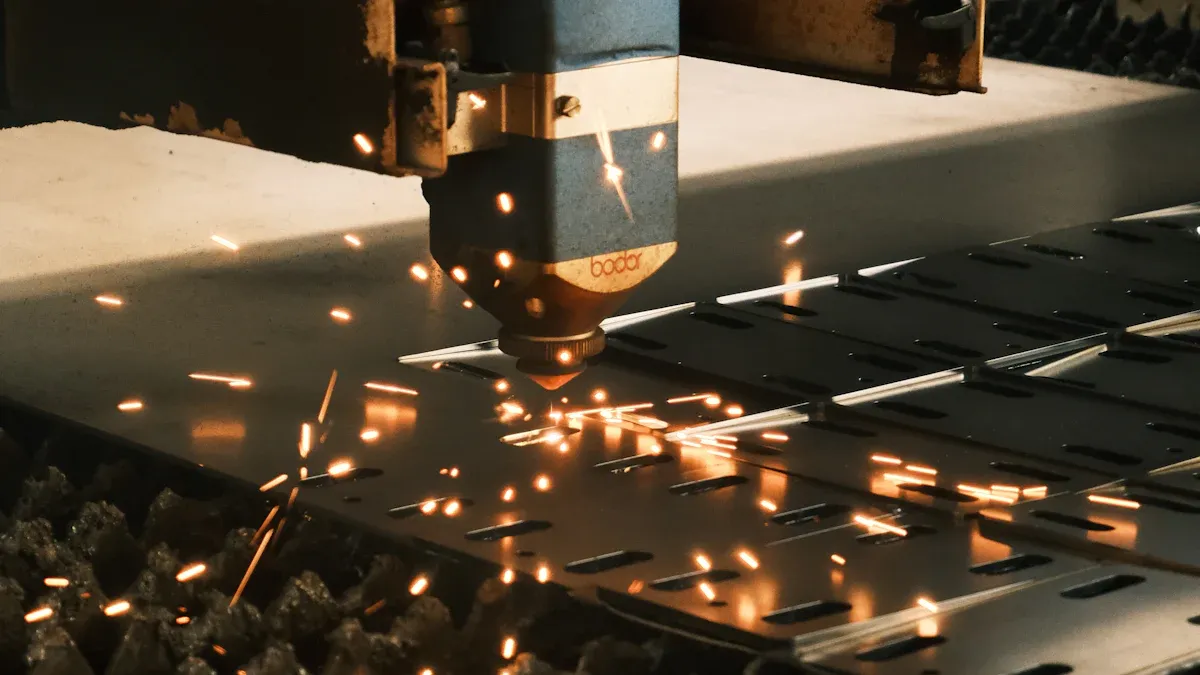
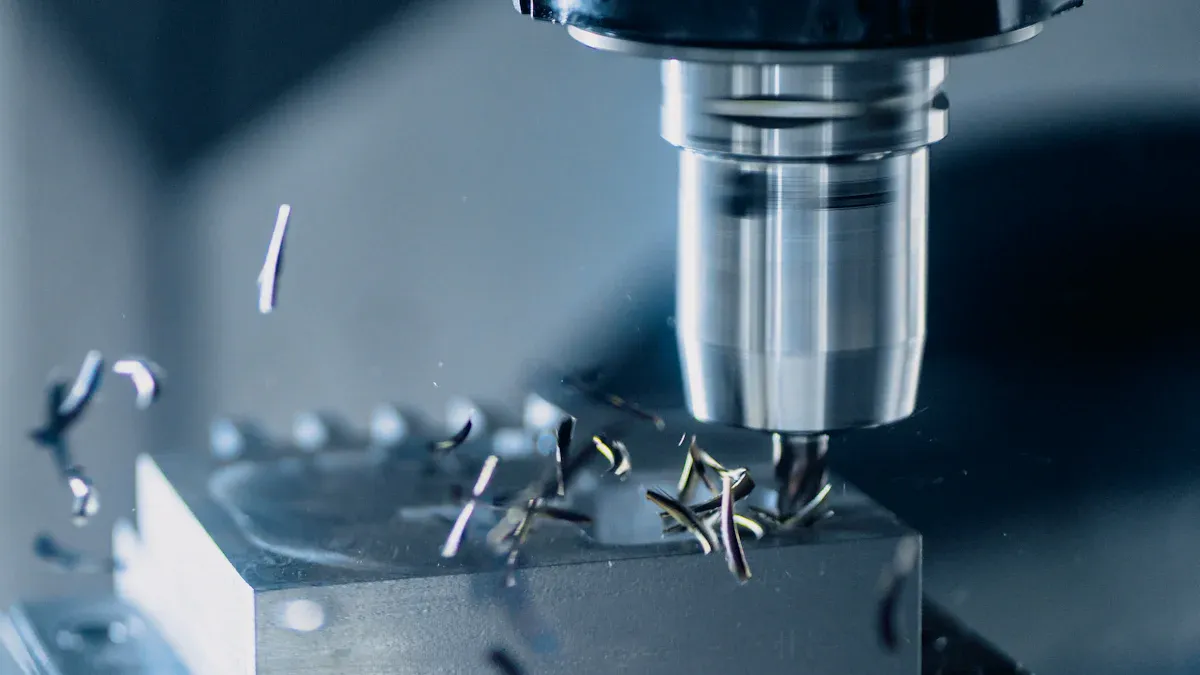
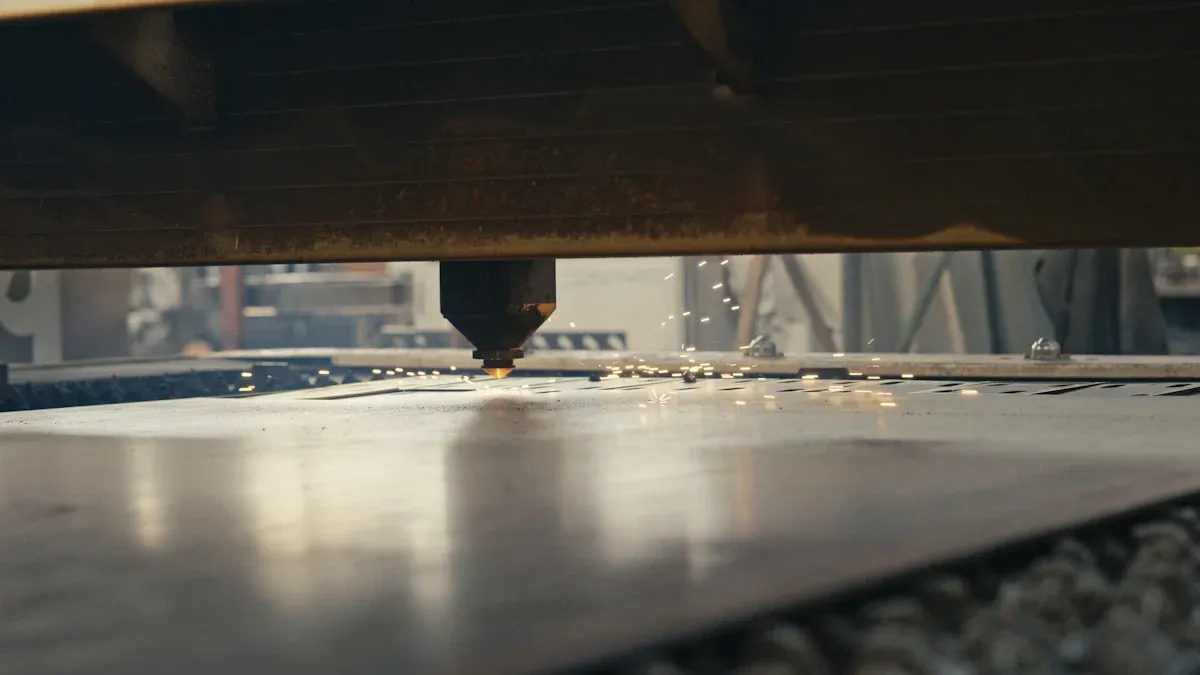
Precision in sheet metal fabrication defines the success of your projects, especially when you aim for high precision in demanding fields like aerospace, medical, and automotive manufacturing. You gain better quality, tighter tolerances, and greater accuracy by focusing on design, material selection, advanced equipment, and skilled labor. These factors help reduce waste and lower production costs while supporting complex, custom parts. Selecting the proper fabricator and embracing The Art and Science of Precision Sheet Metal Fabrication ensure consistent results and reliable performance.
Importance of Precision in Sheet Metal Fabrication
Benefits of High Precision
You cannot overstate the importance of precision in sheet metal fabrication. When you focus on precision, you ensure that every part fits and functions as intended. This attention to detail leads to high-quality items that meet strict industry standards. Here are some key benefits you gain from high precision:
You improve structural durability by preventing weaknesses caused by misaligned or poorly cut components.
You enhance functionality because parts fit and operate correctly, which helps you avoid malfunctions.
You maintain a clean, professional appearance with smooth finishes and sharp lines.
You reduce material waste and rework, which saves money and supports sustainability goals.
You meet safety and regulatory requirements, lowering the risk of accidents.
Case studies show that precision sheet metal fabrication can shorten lead times, reduce errors, and build customer trust. For example, advanced equipment and integrated processes allow you to deliver thousands of precision parts quickly and reliably. This approach not only improves product lifecycle but also boosts customer satisfaction.
You also see measurable improvements in quality. Standardized quality control and advanced cutting technologies can reduce material waste by up to 30%. These methods help you achieve better dimensional accuracy and surface quality, which supports efficient production and integration with automated systems.
Tip: Setting accurate tolerances and using robust inspection tools like coordinate measuring machines (CMMs) can cut rework and improve first-pass yield rates.
Common Precision Challenges
Even with the best intentions, you face several challenges in achieving high precision. Understanding these obstacles helps you plan better and maintain quality throughout your sheet metal fabrication process.
Machine and tool precision: Small changes in machine settings or tool wear can affect bend dimensions and tolerances.
Operator expertise: Skilled operators must control force and speed, making constant adjustments to maintain accuracy.
Material consistency: Variations in sheet thickness or internal stress can cause dimensional inconsistencies.
Surface deformations: Bending and forming can create bulges or unevenness, especially near bends and holes.
Measurement difficulties: Irregular surfaces and alignment issues make it hard to get consistent measurements.
Cumulative errors: Multiple bends or features can add up to significant dimensional deviations.
Special features: Adding ribs, louvers, lugs, or notches increases the complexity and risk of misalignment.
Welding fixtures: While fixtures help with alignment, overuse can cause warping, so initial precision remains crucial.
You must address these challenges with careful planning, skilled labor, and advanced quality control to achieve the best results in precision sheet metal fabrication.
Design and Planning for Precision
Design Optimization and DFM
You set the foundation for high precision in sheet metal fabrication during the design phase. Design optimization uses advanced computer simulations, such as Finite Element Analysis and Multiphysics Simulation, to test your ideas before you cut any metal. These tools let you check for stress, fatigue, and heat transfer. You can improve strength and durability while reducing waste and speeding up production.
When you apply Design for Manufacturability (DFM), you make choices that simplify the process and boost precision. For example, you should:
Use reliable tools like press brakes and punches to streamline production.
Apply tight tolerances only to critical features to avoid unnecessary complexity.
Standardize bend angles and radii to reduce errors.
Select the right sheet metal gauge for your application.
Place holes at least one diameter away from bends to prevent deformation.
Clearly mark asymmetrical features to avoid mistakes during bending.
DFM also encourages you to specify hardware requirements and optimize material usage. By considering standard sheet sizes and consistent thicknesses, you improve nesting and reduce variability. These strategies help you achieve better accuracy and fewer defects.
Tip: Early collaboration between design and manufacturing teams leads to fewer revisions and higher quality parts.
CAD, CAM, and CAE Tools
You rely on advanced software to bring your designs to life with precision and accuracy. CAD tools let you create detailed 3D models, making it easier to spot issues before production. You can visualize every feature and ensure that changes update automatically across all drawings. This reduces errors and keeps your project on track.
CAM software converts your designs into machine instructions, optimizing tool paths and automating processes. This reduces human error and ensures consistent results, especially when using cnc equipment. CAE tools allow you to simulate forming and bending operations, so you can predict and fix problems before they happen.
Modern software, such as RADAN and TRUMPF MetaCAM, offers features like offline press brake programming and 3D simulation. These tools help you optimize bending and cutting, avoid collisions, and maximize material usage. By integrating CAD, CAM, and CAE, you minimize trial-and-error, shorten lead times, and achieve the high precision required for demanding applications.
Material Selection and Preparation
Choosing Consistent Materials
You set the stage for precision by choosing the correct materials. Accurate material selection ensures that every part you fabricate meets strict requirements for strength, flexibility, and surface finish. When you select materials with consistent properties, you gain several advantages:
You reduce tooling wear and maintain tight tolerance control.
You achieve a smoother surface finish and predictable bending behavior.
You minimize rework and improve repeatability in your processes.
You align material choice with manufacturability and precision needs by collaborating early with design engineers and material specialists.
Even small differences in material composition or hardness can change how a sheet responds to cutting, forming, or welding. For example, cold rolled steel offers better consistency and is preferred for precision bending, while hot rolled carbon steels show more variability. You must also consider material thickness tolerances and inherent variances to maintain part integrity.
Tip: Understanding and accounting for material tolerance helps you achieve consistent quality and functional performance in sheet metal fabrication.
To ensure high precision, follow these steps for accurate material selection:
Understand the alloy properties needed for your application, such as strength and corrosion resistance.
Consider thermal treatments like annealing or tempering to improve dimensional stability.
Test materials before fabrication using hardness and tensile tests.
Check dimensions during fabrication with calipers or coordinate measuring machines (CMM).
Keep detailed records of inspections and test results for traceability.
Material Handling and Preparation
Proper handling and preparation of materials play a critical role in achieving precision. You must cut and shape raw metal sheets using precise methods like laser, water jet, or plasma cutting. When you form and bend parts, use equipment such as press brakes and rolling machines to create accurate shapes.
Always clean the metal to remove debris and ensure a consistent surface finish.
Handle sheets carefully during loading and unloading to prevent accidental bending or damage.
Prepare for welding by aligning and cleaning parts for strong, smooth welds.
A consistent surface finish reduces variations in bending forces and promotes uniform results. Careful handling and preparation help you avoid errors and maintain the high standards required for accurate material selection. When you pay attention to these details, you lay the foundation for reliable and precise fabrication.
Note: Forming complex shapes from flat sheets requires meticulous handling and attention to detail. This approach minimizes errors and supports the precision needed for intricate parts.
The Art and Science of Precision Sheet Metal Fabrication
Achieving excellence in the art and science of precision sheet metal fabrication requires you to combine advanced machinery, skilled labor, and strict process control. You must select the correct fabrication technique for each stage, from cutting to forming and assembly. This approach ensures you meet tight tolerances and deliver consistent, high-quality results.
Cutting Methods (CNC, Laser, Water Jet)
You start with cutting, which sets the foundation for precision. Selecting the proper fabrication method depends on your material, thickness, and required tolerances. The most accurate options use state-of-the-art CNC machining, which automates the process and reduces human error. Here is a comparison of common cutting methods:
Cutting Method | Typical Tolerance Range (mm) | Key Characteristics and Suitability |
Water Jet Cutting | ±0.03 to ±0.08 | Most accurate; cold cutting eliminates thermal distortion; suitable for all materials and thicknesses |
Laser Cutting | ±0.05 to ±0.1 | High precision for thin to medium thickness; faster processing; slight thermal effects |
Plasma Cutting | ±0.5 to ±1.5 | Looser tolerances; suited for thick structural parts; faster but less precise |
Mechanical Shearing | ±0.1 to ±0.5 | Moderate precision; cost-effective for straight cuts; depends on blade condition and material |
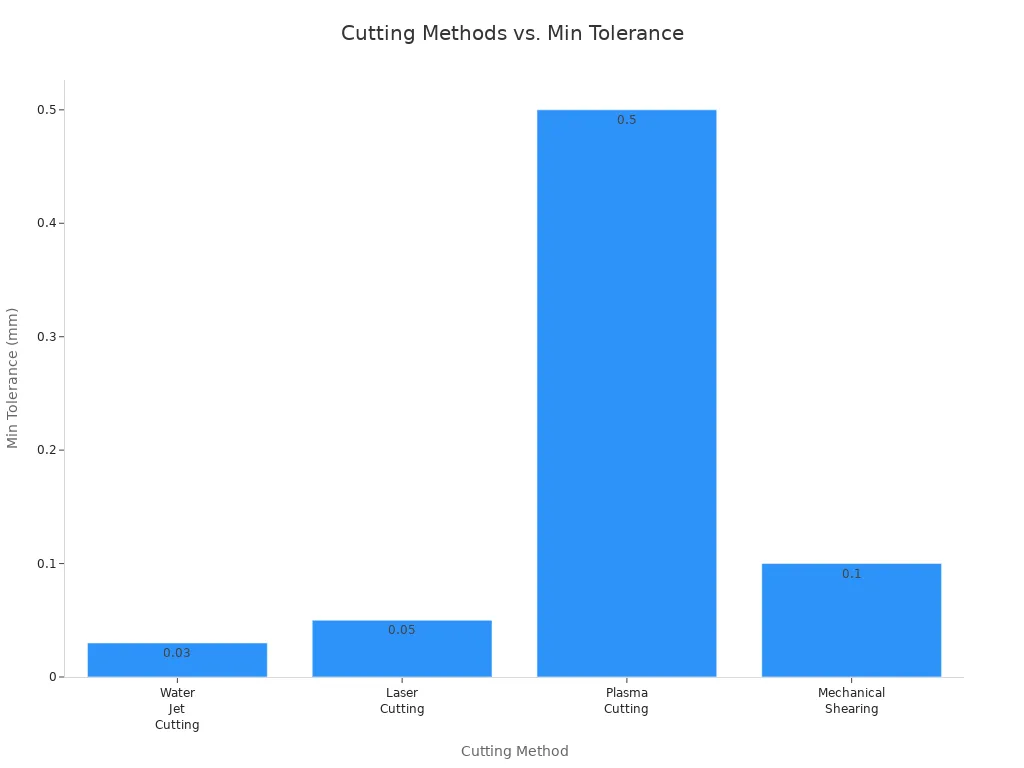
Water jet cutting stands out for its ability to maintain tight tolerances across all materials and thicknesses. You avoid heat-affected zones, which is critical for metals like titanium or thick stainless steel. Laser cutting offers unmatched speed and precision for thin to medium sheet metals. You achieve tolerances as tight as ±0.002 inches, making it ideal for intricate features and detailed engraving. State-of-the-art CNC machining ensures repeatability and accuracy, especially when you need high precision for critical parts.
Laser cutting also provides a narrow kerf width and a clean edge, reducing the need for secondary processing. Water jet cutting, while slower, handles thicker materials and avoids thermal distortion. Both methods use CNC controls, so you can rely on automated, repeatable results for mass production. When you select the proper fabrication method, you set the stage for the rest of the process.
Forming and Bending Techniques
After cutting, you move to forming and bending. The art and science of precision sheet metal fabrication relies on advanced techniques and skilled operators to achieve precise shapes and angles. You must choose the correct fabrication technique based on the part geometry and required tolerances.
V-Bending: You use a V-shaped punch and die. Air bending allows flexibility in angles, while bottoming ensures repeatable, precise bends.
Coining: You apply high force to press the sheet fully into the die. This method delivers highly accurate bends with minimal spring back.
Roll Bending: You form cylindrical or curved shapes gradually using rollers.
Wipe Bending: You clamp the edge and create smooth bends, ideal for flanges and edges.
Rotary Bending: You achieve smooth bends greater than 90 degrees with a V-shaped rocker.
Modern CNC press brake machines play a vital role in the art and science of precision sheet metal fabrication. These machines use state-of-the-art CNC machining to automate bending, reduce human error, and maintain tight tolerances as close as ±0.05 mm. You benefit from consistent repeatability, which is essential for complex parts and high-volume production.
Technology/Method | Impact on Accuracy and Quality | Industry/Application Examples |
CNC-Controlled Processes | Automates machining tools to reduce human error, increase repeatability, and enable precise shaping with tight tolerances (IT8 or IT6). | Aerospace, automotive, medical, electronics |
High-Precision Forming Methods | Includes bending, deep drawing, and hydroforming; enables precise angles, complex 3D shapes, and excellent surface finishes. | Aerospace, automotive, medical |
Hydroforming Innovations | Bidirectional electromagnetic impact hydroforming improves material flow control, reduces thinning, and enhances die-fitting accuracy. | Aerospace, automotive |
Laser Cutting and Robotics | Minimizes material deformation and ensures consistent quality through automation. | Electronics, automotive |
Simulation Software & CAD | Optimizes part geometry and forming processes, predicts material behavior, reduces defects and lead times. | Automotive, aerospace |
You can further improve accuracy by using deliberate design choices. For example, the 3-plate method helps you maintain flatness and parallelism in complex assemblies. Rounded corners reduce stress concentrations and improve forming consistency. Precision forming with advanced CNC controls ensures you meet the strictest requirements in industries like aerospace and medical devices.
Tip: Skilled technicians and robust quality control are essential for achieving high precision in every bend and form.
Assembly and Finishing Steps
The final steps in the art and science of precision sheet metal fabrication involve assembly and finishing. You must preserve precision throughout these stages to ensure the finished product meets all specifications.
Mechanical Assembly: You use nuts, bolts, and screws for non-permanent joints. This method allows future adjustments or replacements.
Weld Assembly: You permanently fuse parts for strong, structural components. Spot welding offers a less permanent, cost-effective option.
Rivet Assembly: You join parts securely, often used in aerospace and automotive applications.
Precision Machining: You perform drilling, milling, and chamfering to maintain tight tolerances.
Edge Deburring and Finishing: You remove sharp edges and imperfections to ensure cosmetic quality and dimensional accuracy.
Powder Coating and Painting: You protect surfaces and maintain appearance without compromising precision.
You should complete fabrication, assembly, and finishing under one roof whenever possible. This integrated approach reduces downtime, labor costs, and the risk of damage, helping you preserve precision. State-of-the-art CNC machining supports these steps by ensuring consistent part integration and alignment.
Finishing techniques also influence dimensional accuracy. Heat treatment, such as soft annealing, reduces residual stresses and improves machinability. Near-net-shape forming minimizes the need for finish machining, reducing deformation risks. Careful process planning and parameter control help you achieve the desired tolerances and maintain high precision.
Note: For parts that require finish machining, form complex shapes to near-net-shape and leave simple surfaces for final machining. This strategy helps you maintain accuracy and reduce costs.
By mastering the art and science of precision sheet metal fabrication, you deliver reliable, high-quality products that meet the most demanding standards.
Quality Control in Precision Sheet Metal Fabrication
Inspection and Measurement
You achieve high accuracy and close tolerances in sheet metal fabrication by implementing stringent quality control measures at every stage. Leading manufacturers focus on measuring only critical features, which helps you optimize inspection time and cost. You avoid redundant checks when machine tolerances, such as those from laser cutting, already provide reliable results. Integrating quality inspections directly into production ensures you catch deviations early.
You rely on advanced tools for precision measurement. Digital calipers, micrometers, and wireless-enabled gauges allow you to collect data quickly and accurately. Coordinate Measuring Machines (CMMs) and 3D scanning systems help you compare finished parts to CAD models, ensuring each part meets design requirements. Manual measuring systems with encoder technology offer a robust and cost-effective solution for shop floor inspections. These tools, combined with operator inspections after each process step, help you maintain accuracy and reduce the risk of nonconformance.
Tip: Use calibrated equipment and follow industry standards like ISO 9001:2015 or AS9102 to reinforce your quality management system.
Maintaining Tolerances
You maintain tight tolerances by combining process control, feedback systems, and collaboration. Tolerance defines the acceptable variation in size, shape, and position of your parts. You must select tolerances based on function, material properties, and precision requirements. Overly tight tolerances increase cost and complexity, while loose tolerances can cause fit and quality issues.
To keep your process on track, you use Statistical Process Control (SPC) and smart sensors. These systems monitor parameters like temperature, pressure, and material thickness in real time. When deviations occur, you receive immediate feedback, allowing you to make prompt adjustments. Automated machinery and digital inspection tools, such as optical scanners and CMMs, further enhance your ability to maintain accuracy.
Collaborate early with engineers and fabricators to set realistic tolerances.
Apply tighter tolerances only where necessary.
Ensure your CAD model reflects the latest tolerance requirements.
Tolerance Type | Typical Use Case | Impact on Quality |
Dimensional | Overall part size | Ensures proper fit |
Geometric | Shape and feature alignment | Reduces assembly errors |
Flatness/Parallelism | Surface and edge consistency | Improves durability |
By following these practices and using stringent quality control measures, you consistently deliver parts that meet the highest standards for accuracy and quality in sheet metal fabrication.
You achieve high precision in sheet metal fabrication by focusing on design, material selection, advanced equipment, and rigorous quality control. Lean manufacturing, automation, and skilled labor drive consistent results. Case studies show that combining cutting, bending, and finishing creates flexible, high-quality parts.
Key Aspect | Sheet Metal Fabrication | Metal Stamping |
Typical Tolerances | ±0.005” to ±0.015” | ±0.001” to ±0.005” |
Best Use Case | Small batches, customization | High-volume, tight tolerance |
For complex projects, collaborate with experts, use certified materials, and follow industry standards like ISO 9001:2015. Continuous improvement ensures you sustain precision and quality over time.
FAQ
What is the most important factor for achieving high precision in sheet metal fabrication?
You must focus on design optimization. Start with accurate CAD models and clear tolerances. Combine this with skilled operators and advanced equipment. This approach ensures you meet strict requirements and deliver consistent results.
How do you minimize errors during the fabrication process?
You should use automated CNC machines and real-time quality checks. Implement process controls and monitor key parameters. Early detection of deviations helps you correct issues before they affect the final product.
Which materials work best for precision sheet metal fabrication?
You get the best results with cold rolled steel, stainless steel, and aluminum alloys. These materials offer consistent thickness and predictable behavior. Always verify material certifications and test samples before starting production.
How can you ensure parts meet tight tolerances?
Use calibrated measuring tools like CMMs and micrometers. Inspect critical features at each stage. Apply statistical process control to monitor variations and adjust processes quickly.
What finishing methods help maintain precision?
You should choose powder coating, anodizing, or light machining. These methods protect surfaces and preserve dimensions. Always select a finishing process that matches your tolerance requirements.