In harsh operational environments like marine, medical, and food processing facilities, component failure often traces back to micro-fissures, edge oxidation, or compromised material integrity during the manufacturing process. Original Equipment Manufacturers (OEMs) face a constant challenge. They must balance the need for tight dimensional tolerances and high-volume scalability with the strict requirement of maintaining the native passive layer of stainless alloys. Poor fabrication choices inevitably lead to localized corrosion, thermal distortion, and costly secondary machining operations that destroy project timelines.
Modern fiber laser cutting, when paired with the correct assist gases, optimized machine parameters, and strict thermal management protocols, offers a highly repeatable method for producing complex geometries without degrading the material's inherent properties. This guide evaluates the technical parameters, material behaviors, and vendor capabilities required to successfully source these components, ensuring your production lines remain efficient and your field failure rates drop to zero.
Grade Dictates Process: The choice between 304 and 316L impacts not only environmental survivability but also specific laser power, cutting speed, and assist gas volume requirements.
Assist Gas is Critical: Utilizing high-pressure nitrogen assist gas is non-negotiable for achieving an oxide-free edge that preserves the metal's corrosion resistance straight off the machine.
Thermal Management Prevents Warping: Strict control over the Heat-Affected Zone (HAZ) is required to prevent microstructural changes and thermal distortion, particularly in thin-gauge applications.
Calibration Over Power: Achieving dross-free, clean-cut edges relies heavily on the fine-tuning of nozzle selection, laser focal point, pulse frequency, and duty cycle.
Vendor Evaluation Requires Technical Scrutiny: Shortlisting a fabrication partner requires assessing their fiber laser wattage, automated nesting efficiency, cross-contamination prevention protocols, and in-house passivation capabilities.
Success Criteria for Manufacturing Corrosion Resistant Metal Parts
The Chemistry of Passivation
Understanding how raw chromium content reacts with oxygen is fundamental to working with stainless alloys. These metals typically contain a minimum of 10.5% up to 18% or more chromium. When exposed to oxygen, the chromium forms a self-healing, microscopic passive oxide layer on the surface. This layer acts as a shield against environmental degradation. High-heat fabrication disrupts this delicate chemical balance. If the heat input burns away the chromium at the cut edge, the material loses its ability to passivate, leaving it vulnerable to rapid oxidation and rust. Operators must manage heat input precisely to maintain this chemical barrier.
Defining Environmental and Mechanical Tolerances
Before initiating production, you must establish the baseline requirements for the component. This includes defining the necessary tensile strength, operating temperature ranges, and exposure to aggressive elements like chlorides, sulfides, or acidic compounds. A part destined for a temperature-controlled server room requires vastly different mechanical tolerances than one submerged in seawater. Defining these parameters early ensures you select the correct alloy and the appropriate cutting methodology to produce durable corrosion resistant metal parts that survive their intended lifecycle.
The Role of Edge Quality in Preventing Localized Corrosion
Edge finish serves as a primary success metric on the shop floor. Dross, micro-cracking, or oxidation at the cut edge creates microscopic initiation sites for pitting and crevice corrosion. When a laser leaves a jagged or burnt edge, moisture and chlorides accumulate in those microscopic valleys. Over time, this localized concentration breaks down the passive layer. Achieving a smooth, dross-free cut directly correlates to the long-term survivability of the part in the field. We measure edge roughness in micro-inches, and keeping that number low prevents premature field failures.
Minimizing the Heat-Affected Zone (HAZ)
The Heat-Affected Zone (HAZ) represents the area of base metal that has not been melted but has had its microstructure and properties altered by intensive heat-cutting operations. Defining the acceptable limits of thermal input prevents carbide precipitation, known as sensitization. Sensitization depletes chromium at the grain boundaries, severely compromising rust resistance. By optimizing laser speed and power, operators keep the HAZ as narrow as possible, preserving the integrity of the surrounding metal. We often use macro-etching techniques to verify the HAZ remains within acceptable engineering limits.
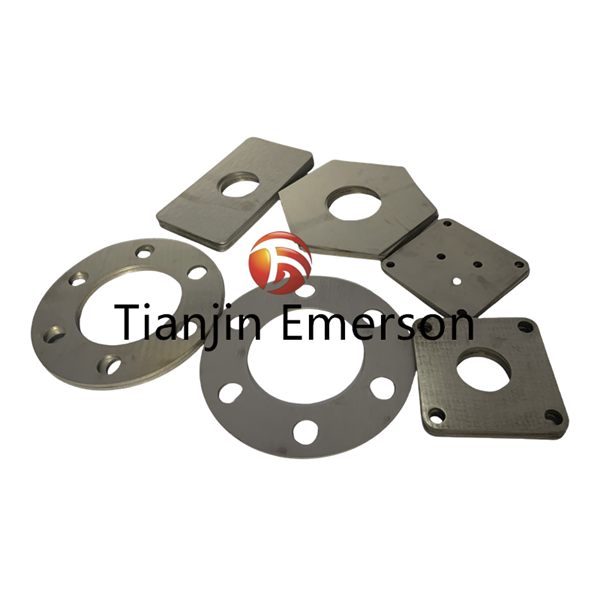
Material Selection: Evaluating Stainless Grades for Laser Processing
304 Stainless Laser Cutting (General Purpose & Cost-Efficiency)
Grade 304 stands as the most common austenitic stainless steel. It offers excellent laser absorption characteristics and a strong baseline of corrosion resistance. Utilizing 304 stainless laser cutting works perfectly for everything from decorative architectural features to standard industrial enclosures. Because it cuts cleanly and predictably under a fiber laser, it remains the go-to choice for projects requiring a balance of structural integrity and cost-efficiency without extreme environmental exposure. Operators can push feed rates higher on 304 compared to more complex alloys, optimizing machine uptime.
316L Sheet Metal Fabrication (Marine & Medical Grade)
When parts face harsh chlorides or require medical-grade sanitation, 316L provides the necessary performance. The addition of molybdenum and a lower carbon content gives it exceptional resistance to pitting and crevice corrosion. During 316L sheet metal fabrication, operators make slight adjustments to the laser focal position and power density. The material behaves differently under the beam compared to 304, requiring precise calibration to achieve clean, dross-free cuts that maintain its marine-grade properties. The lower carbon content specifically prevents carbide precipitation during the cutting process.
High-Chromium Alloys (301, 302, 303)
Specialized grades like 301, 302, and 303 fit applications where specific tensile strengths or high-hardness characteristics matter most. Grade 301 hardens rapidly during mechanical working, while 303 serves as a free-machining grade containing added sulfur. The sulfur in 303 makes it easier to machine on a lathe but negatively impacts edge quality during laser cutting, often resulting in a rougher edge compared to standard austenitic grades. Assessing these machinability trade-offs prevents unexpected secondary processing costs when specifying high-chromium alloys for precision cutting.
Stainless Steel Laser Cutting Technologies and Approaches
Fiber Lasers vs. CO2 Lasers
The manufacturing industry relies primarily on two laser technologies: fiber and CO2. Solid-state fiber lasers, operating at a wavelength of approximately 1.06µm, dominate stainless alloy processing. The shorter wavelength results in significantly higher absorption rates by the metal. This allows for faster cutting speeds and the ability to process highly reflective surfaces without the risk of back-reflection damaging the machine's internal optics. CO2 lasers, while effective for thicker mild steel or non-metals, struggle to match the speed and efficiency of fiber lasers on stainless materials. Upgrading to high-wattage fiber systems drastically reduces cycle times.
Power Dynamics and Energy Absorption vs. Mild Steel
Cutting stainless alloys demands higher laser power and slower, more controlled cutting speeds than mild or carbon steel. This stems from distinct differences in thermal conductivity and reflectivity. Stainless steel reflects more of the laser's energy and dissipates heat differently. To achieve a clean cut, the machine must deliver a higher concentration of energy to pierce and melt the material, while the motion system maintains a steady, optimized pace to allow the assist gas to clear the kerf effectively. We constantly monitor the melt pool dynamics to ensure the energy density matches the material thickness.
Assist Gas Dynamics (Nitrogen vs. Oxygen)
The choice of assist gas fundamentally alters the chemistry and quality of the cut edge. Operators must select the correct gas based on the final application of the part.
Nitrogen acts as an inert cooling and shielding gas. It blows away molten material mechanically while preventing ambient oxygen from reacting with the heated metal. The result is a bright, clean, oxide-free edge that preserves the material's passive layer and is ready for immediate welding or assembly.
Oxygen acts as an exothermic catalyst. It reacts with the metal, increasing the cutting speed and allowing for thicker cuts at lower power. However, it leaves a chromium-depleted, darkened oxide layer on the edge. This layer requires manual grinding or chemical treatment before welding or final use, adding secondary processing time.
Critical Machine Calibration Parameters (The "Perfect Cut" Protocol)
Achieving optimal results requires strict adherence to machine calibration protocols. Operators adjust several variables to dial in the perfect cut.
Nozzle Selection: Operators choose between single and double nozzle configurations and select the correct orifice size. High-pressure nitrogen requires specific nozzle geometries to ensure the gas column effectively clears the molten slag without causing turbulence.
Focal Point Calibration: The focal position sits deep inside or slightly below the bottom of the sheet. This creates a wider kerf profile at the bottom of the cut, ensuring molten material and slag evacuate efficiently rather than clinging to the lower edge.
Frequency and Duty Cycle: Fine-tuning the pulse parameters during the initial piercing and subsequent cutting cycles minimizes heat accumulation. Proper duty cycle management prevents the material from overheating, reducing the HAZ and preventing thermal distortion.
Evaluation Dimensions: Capabilities vs. Production Outcomes
Dimensional Accuracy and Repeatability
For stainless steel OEM parts, expected tolerances typically hover around ±0.005 inches or tighter. Advanced CNC linear-drive motion control systems ensure this level of consistency across high-volume production runs. These systems eliminate the backlash associated with traditional rack-and-pinion drives, allowing the cutting head to execute complex geometries, sharp corners, and micro-perforations with absolute precision, part after part. We verify these tolerances using automated optical inspection systems directly on the shop floor.
Scalability, Nesting, and Automation
Handling large contracts requires robust scalability. Automated material handling, including automated load and unload systems, significantly reduces cycle times and minimizes manual labor. Dynamic nesting software plays an equally important role. By intelligently arranging parts on the raw sheet, nesting software maximizes material utilization, reducing scrap and lowering the per-part material costs. Efficient nesting acts as a direct driver of project profitability, especially when dealing with expensive high-nickel alloys.
Industry Compliance and Traceability
Critical applications in FDA food-grade, aerospace, or marine sectors demand strict adherence to industry standards. Fabrication partners must provide complete traceability. This includes supplying Material Test Reports (MTRs) and mill certifications to verify the exact chemical composition of the raw sheets. Adherence to ISO 9001 quality systems and specific ASTM/ASME standards ensures the manufacturing process remains controlled, documented, and reliable from raw material intake to final inspection.
Cost Factors and Conceptual Trade-offs
Material Yield vs. Nesting Efficiency
The high cost of raw stainless alloys makes advanced nesting algorithms a primary driver of overall project efficiency. Even a 5% increase in material yield results in substantial savings over a large production run. Fabricators balance the desire to pack parts tightly with the need to maintain sufficient skeletal web thickness to prevent the sheet from warping or shifting during the cutting process. We utilize common-line cutting techniques where applicable to further reduce scrap and machine travel time.
Cutting Speed vs. Edge Finish Quality (The Dross Factor)
There is a constant trade-off between machine feed rates and edge quality. Pushing the laser to cut faster lowers the direct machine time per part. However, excessive speed often results in dross—melt-slag that solidifies on the bottom edge of the cut. Removing this dross requires labor-intensive manual deburring or mechanical tumbling. The savings gained from faster cutting quickly disappear due to the added labor costs of secondary edge cleanup. Dialing in the optimal speed ensures parts come off the machine ready for the next routing step.
As-Cut Viability vs. Secondary Processing
Evaluating when an edge is sufficient for final use controls costs effectively. A nitrogen-cut edge often proves viable "as-cut" for many internal components or welded assemblies. However, if the part faces highly corrosive environments or requires a flawless aesthetic finish, secondary operations become strictly necessary. Processes like electropolishing, tumbling, or chemical passivation fully restore the passive oxide layer and remove any microscopic surface contaminants left behind by handling.
Comparison of Processing Approaches | Assist Gas | Cutting Speed | Edge Quality | Secondary Processing Required? | Best Use Case |
| Oxygen | Fast | Oxidized, dark edge | Yes (Grinding/Chemical) | Thick plates, non-aesthetic internal structural parts |
| Nitrogen | Moderate | Bright, clean, dross-free | No (Usually ready to weld) | Precision OEM parts, medical devices, marine hardware |
| Compressed Air | Fast | Slightly oxidized, yellow tint | Depends on application | Cost-sensitive brackets, painted enclosures |
Implementation Risks and Mitigation Strategies
Mitigating Thermal Distortion in Thin-Gauge Sheets
Materials under 16-gauge suffer from warping due to localized heat input. To mitigate thermal distortion, operators employ specific cooling strategies. Continuous pulse cutting reduces the overall heat transferred to the sheet. Optimized cut sequencing, such as stitching and distributing cuts across different areas of the sheet rather than cutting sequentially in one corner, helps dissipate thermal energy. Rigid fixturing and specialized slat configurations keep the material flat during processing, preventing head crashes and dimensional inaccuracies.
Preventing Cross-Contamination during Fabrication
One of the most severe risks in stainless fabrication involves carbon steel contamination. If carbon steel dust or particles embed into the stainless surface, they rust when exposed to moisture, causing surface staining that mimics material failure. Vendors must use dedicated cutting beds equipped with copper or stainless slats. They must maintain separate storage racks, dedicated handling tools, and isolated grinding areas to prevent induced rusting. We enforce strict physical separation between ferrous and non-ferrous processing zones.
Handling Surface Finishes
Many components require pre-finished materials, such as #4 brushed, satin, or No. 8 mirror-polished surfaces. Cutting these materials requires specialized, laser-compatible protective PVC films. Standard films melt, leaving a sticky adhesive residue or causing severe edge burn. Laser-specific films vaporize cleanly under the beam, protecting the aesthetic surface from scratches during handling and processing without compromising the cut quality. Operators must ensure the film tension remains consistent to prevent bubbling during the pierce cycle.
Implementing stainless steel laser cutting effectively requires a deep understanding of material science and machine dynamics. By controlling the variables discussed, manufacturers produce superior components that withstand the harshest environments.
Conclusion
Ensure your fabrication strategy aligns with the strict requirements of corrosion-resistant applications by taking decisive action.
Mandate the use of high-pressure nitrogen assist gas for all critical components to eliminate edge oxidation and preserve the material's passive layer.
Audit your fabrication partner's facility specifically for cross-contamination controls, ensuring they utilize dedicated handling equipment and storage for stainless alloys.
Require full material traceability, including MTRs and mill certifications, before approving any high-volume production run to guarantee the chemical integrity of your parts.
Implement strict edge quality inspections, utilizing micro-inch roughness measurements to verify the absence of dross and micro-cracking.
FAQ
Q: Why is nitrogen preferred over oxygen for cutting stainless alloys?
A: Nitrogen acts as an inert shielding gas that blows away molten metal without reacting with it. This prevents oxidation, leaving a bright, clean edge that retains its corrosion resistance and requires no secondary grinding before welding.
Q: How does the heat-affected zone (HAZ) impact corrosion resistance?
A: Excessive heat alters the metal's microstructure, causing carbon to bind with chromium. This depletes the chromium available to form the protective oxide layer, making the HAZ highly susceptible to localized rusting.
Q: Can laser cutting cause thin-gauge stainless sheets to warp?
A: Yes, localized heat input causes thermal distortion in thin materials. Operators mitigate this by using pulse cutting, optimizing the cutting sequence to distribute heat, and using proper material fixturing.
Q: What is the difference between 304 and 316L in laser processing?
A: While both cut well, 316L contains molybdenum for superior marine-grade corrosion resistance. It requires slightly different focal point and power density calibrations compared to 304 to achieve a perfectly dross-free edge.
Q: How do fabricators prevent carbon steel contamination?
A: Fabricators prevent contamination by using dedicated copper or stainless steel cutting bed slats, isolating storage areas, and using separate handling tools and grinding abrasives exclusively for stainless materials.
Q: Do laser-cut stainless parts require chemical passivation?
A: If cut with nitrogen and handled correctly, the edge retains its passive layer. However, for highly critical medical or marine applications, secondary chemical passivation ensures absolute surface purity and removes handling contaminants.


