Specifying industrial flooring requires balancing structural integrity, environmental resistance, and precise tolerances. When engineers select materials for walkways and platforms, a single miscalculation in load-bearing requirements or environmental corrosiveness causes structural failures, non-compliance fines, and facility downtime. The stakes are high, making the evaluation of grating solutions a strict requirement for facility safety and operational continuity.
Project teams often struggle to find the exact balance between necessary strength and efficiency, risking under-performance or over-engineering. Successful deployment demands a rigorous evaluation of fabrication methods, material specifications, surface treatments, and installation realities. By understanding the nuances of steel grating fabrication, specifiers ensure long-term structural stability, safety compliance, and optimal performance across diverse industrial applications.
Fabrication Method Dictates Performance: The choice between welded, press-locked, and riveted fabrication directly determines load capacity, impact resistance, and fatigue limits.
Environmental Matching is Critical: Selecting the correct surface treatment (e.g., hot-dipped galvanized) prevents premature structural degradation in harsh chemical or high-moisture environments.
Custom Fabrication Reduces Field Risk: Specifying pre-engineered cutouts and custom sizing minimizes hazardous on-site modifications and ensures strict adherence to OSHA/ANSI standards.
Framing the Specification Criteria for Industrial Walkways
Load-Bearing Requirements and Span Dynamics
Defining the success criteria for load management begins with differentiating between uniform distributed loads (UDL) and concentrated point loads. UDL applies to general foot traffic and stationary equipment spread over a wide area. Point loads account for heavy, localized impacts like machinery feet or vehicle wheels. The relationship between bearing bar depth, thickness, and maximum unsupported span lengths forms the foundation of structural safety. Thicker, deeper bars allow for longer spans without deflection.
Dynamic loads significantly alter baseline static load requirements. Forklift traffic, heavy machinery vibration, and rolling carts introduce impact forces that static calculations miss. Engineers apply appropriate impact factors when specifying grating for dynamic environments to prevent premature metal fatigue and structural failure. We always verify these factors against the manufacturer's published load tables before finalizing any design.
Standard Load Dynamics for Industrial Grating | Load Type | Application Example | Design Consideration | Impact Factor Requirement |
| Uniform Distributed Load (UDL) | Pedestrian walkways, catwalks | Overall span deflection limits | Standard static calculation |
| Concentrated Point Load | Equipment legs, structural posts | Localized bar bending and shear stress | Add 20% to static load |
| Dynamic Rolling Load | Forklifts, heavy material carts | Vibration, fatigue, and lateral stress | Add 30-50% to static load |
Environmental Exposure and Corrosion Baselines
Operating environments must be evaluated across several dimensions. We look at chemical exposure, salinity, extreme temperatures, and moisture levels. A standard carbon steel grating degrades rapidly in a highly acidic chemical plant or a salt-heavy coastal facility. Understanding these environmental baselines dictates the necessity for specific alloys or robust protective coatings.
High-moisture environments demand superior rust protection. Extreme temperature fluctuations require materials that resist thermal expansion warping. Matching the material and coating to the specific environmental hazards maximizes the lifespan of the installation. You cannot cut corners on surface treatments when dealing with corrosive industrial byproducts.
Open Surface Area: Drainage, Ventilation, and Light Passage
The percentage of open surface area is a major factor for applications requiring drainage covers, trench grates, or overhead catwalks. High open areas facilitate the rapid passage of liquids, preventing hazardous accumulation on walking surfaces. They also allow for essential ventilation and light penetration in multi-level industrial facilities.
Open area must balance safety with structural integrity. Larger openings improve drainage but reduce the amount of load-bearing steel per square foot. Specifiers calculate the optimal open area that satisfies both fluid dynamics and load-bearing requirements without compromising worker safety. We typically aim for 70-80% open area for standard industrial applications.
Regulatory Compliance and Safety Standards
Compliance with OSHA and ANSI standards for industrial walkway grating is mandatory. These regulations dictate maximum gap sizes to prevent tools from falling through, toe-board requirements for elevated platforms, and minimum load ratings for specific applications. Adhering to the National Association of Architectural Metal Manufacturers (NAAMM) MBG 531 and MBG 532 standards ensures the grating meets rigorous industry benchmarks.
When industrial spaces intersect with public or accessible areas, ADA compliance becomes necessary. This includes specifying high-heel safe spacing and maximum 1/2-inch slot openings to accommodate mobility devices and prevent tripping hazards. We strictly enforce these measurements during the site audit phase.
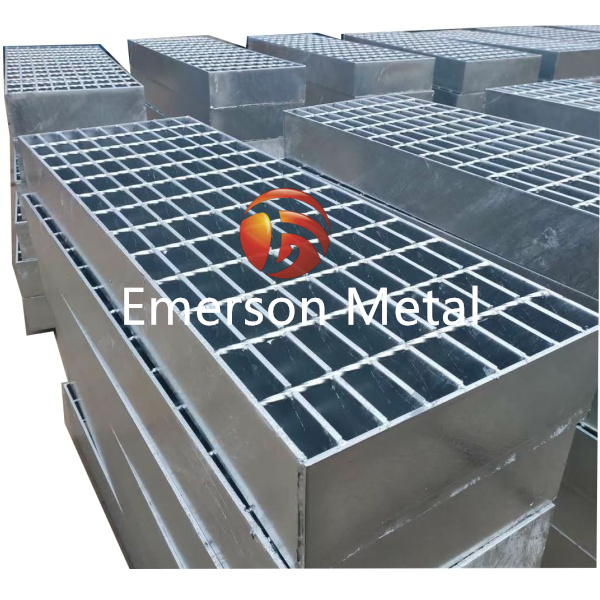
Core Steel Grating Fabrication Methods Evaluated
Welded Steel Grating
The electro-forging process defines welded steel grating. It connects flat steel bearing bars with twisted square cross bars at right angles under intense heat and pressure. This method fuses the metals into a single, rigid panel. Welded grating offers the highest strength-to-weight ratio, making it optimal for heavy-duty industrial platforms and highly durable under continuous traffic.
The intense heat of the welding process can cause warping if not properly controlled during fabrication. The industrial appearance of the twisted cross bars limits its use in architectural applications where aesthetics are a priority. However, for sheer structural performance, it remains the industry standard.
Press-Locked and Swaged Grating
Press-locked grating utilizes a mechanical locking process. It uses high hydraulic pressure to force cross bars into pre-slotted bearing bars. This creates a secure, interlocking grid without the application of heat or welding. Swaged grating employs a similar mechanical deformation process, typically using tubular cross bars.
These methods fit architectural applications, areas requiring tight spacing, and environments where welding heat-affected zones are a liability. The absence of heat distortion results in cleaner lines and tighter tolerances. We often specify press-locked grating for commercial facilities that require a cleaner visual profile.
Alternative Industrial Grating Types: Expanded Metal and Safety Plank Grating
Safety plank grating and expanded metal grating offer specific slip-resistant safety profiles compared to standard bar grating. Safety planks feature diamond-shaped openings with serrated edges, providing aggressive traction in hazardous conditions. Expanded metal is formed by slitting and stretching solid metal sheets, creating a raised diamond pattern.
Safety planking is the ideal choice for environments with high grease, ice, or mud exposure where maximum slip resistance is required. Standard heavy-duty platform grating panels remain the superior choice for high load-bearing requirements and wide-span applications. You must match the grating type to the specific traction requirements of the workforce.
Integrating Checker Plate Grating for Solid Decking
Scenarios requiring solid decking often necessitate the integration of checker plate grating. This composite solution prevents liquid or debris from falling through to lower levels and provides a smooth surface for specific rolling cart traffic. It combines the structural support of bar grating with the solid coverage of a diamond-patterned steel plate.
Welding checker plate to standard grating involves significant trade-offs. It substantially increases the overall weight of the panel, eliminates drainage capabilities, and alters the load dynamics. Engineers must account for these changes when designing the supporting substructure. We always reinforce the underlying beams when switching to solid decking.
Material and Surface Treatment Specifications
Bare Steel vs. Galvanized Steel Grating
Bare carbon steel offers a lower upfront cost but is highly susceptible to rust and degradation. Evaluating the lifecycle of hot-dipped galvanized steel grating reveals significant long-term savings. The galvanization process, adhering to standards like ASTM A123, immerses the steel in molten zinc, creating a metallurgical bond that protects against corrosion.
The thickness of the zinc coating directly impacts longevity in corrosive environments. Thicker coatings provide extended protection, reducing maintenance requirements and replacement frequency. We inspect the galvanization thickness on-site using magnetic thickness gauges to ensure compliance with the specification.
Stainless Steel and Aluminum Alternatives
Niche applications often require materials where carbon steel fails. Food processing facilities, marine environments, and wastewater treatment plants frequently utilize 304 or 316 stainless steel for its superior chemical resistance and hygienic properties. Weight-restricted offshore platforms rely on aluminum grating for its high strength-to-weight ratio and natural corrosion resistance.
Specifying these alternative metals introduces fabrication complexities. Stainless steel is harder to machine, while aluminum requires specialized welding techniques. These factors must be carefully weighed against the environmental demands. We only specify stainless steel when the chemical exposure data explicitly demands it.
Slip Resistance and Surface Profiles
Evaluating surface profiles is a major part of worker safety. Serrated bearing bars provide enhanced traction compared to plain surface bars, biting through slippery substances to secure footing. The choice depends heavily on the operating environment and the types of fluids present on the floor.
Environmental contaminants such as oil, water, snow, or heavy dust necessitate specific slip-resistant profiles. In areas prone to liquid spills or outdoor exposure, serrated grating is highly recommended to maintain worker safety and prevent costly slip-and-fall accidents. We mandate serrated profiles for all exterior catwalks.
Custom Fabrication vs. Standard Platform Grating Panels
The Hidden Costs of Field Modifications
Purchasing standard panels and modifying them on-site carries significant risks. Cutting grating in the field compromises its structural integrity, destroys the protective galvanization layer, and exposes raw edges to immediate corrosion. The labor costs associated with field cutting, grinding, and applying cold galvanizing touch-ups negate any initial savings.
Field modifications rarely achieve the precision required for complex layouts, leading to poorly fitting panels and potential safety hazards. Relying on custom fabrication eliminates these hidden costs and ensures a superior, factory-finished product. We have seen too many field-cut panels fail under load to recommend anything other than factory fabrication.
Precision Cutouts and Banding
Factory-engineered cutouts accommodate pipe penetrations, structural columns, and equipment footprints. Precision cutting ensures tight clearances and maintains the structural flow of the walkway. Cutting bearing bars reduces the panel's load capacity, which must be addressed immediately.
Heavy-duty banding is the structural solution. Welded flat bars applied to all cut edges restore load-bearing capacity and prevent lateral bar movement. Banding transfers the load from the cut bars to the adjacent full-length bars, maintaining the integrity of the grating panel. We reject any custom panels delivered to the site without proper edge banding.
Stair Treads and Catwalk Transitions
Stair tread fabrication standards dictate the design and installation methods for safe vertical transitions. T1 treads are welded with a plain surface, while T2 treads are bolted with a plain surface. T3 treads feature a welded attachment with a visible nosing, and T4 treads are bolted with a nosing.
Integrating visible nosing, such as checker plate or cast abrasive materials, is a strict requirement for high-traffic catwalks and stairways. Nosing improves visibility, defines the edge of the step, and provides slip resistance, satisfying rigorous safety codes and reducing accident risks. We prefer T4 treads for their ease of replacement in heavy industrial settings.
Installation Realities and Structural Risks
Fastening Systems: Mechanical Clips vs. Direct Welding
Choosing the right fastening system impacts both installation speed and long-term maintenance. Mechanical clips, such as saddle clips or G-clips, rely on friction fasteners. They are removable, preserve the galvanized coating, and allow for relatively easy access to sub-floor systems. Direct welding provides a permanent, highly rigid connection but requires cold-galvanizing touch-ups and makes future removal difficult.
The decision framework should be based on maintenance access requirements and structural vibrations. Areas requiring frequent sub-floor access benefit from mechanical clips, while permanent, high-vibration platforms require the stability of direct welding. We evaluate the maintenance schedule before specifying the fastening method.
Assess the frequency of sub-floor maintenance access required by facility operators.
Evaluate the vibration levels generated by nearby heavy machinery.
Select mechanical clips for high-access, low-vibration areas.
Specify direct welding for permanent, high-vibration structural platforms.
Ensure all welded connections receive immediate cold-galvanizing treatment.
Mitigating Vibration and Dynamic Load Fatigue
High-vibration industrial environments pose a significant risk of fastener loosening or weld cracking. Continuous dynamic load fatigue compromises the structural integrity of the grating system over time. Addressing this risk requires proactive mitigation strategies during the specification phase.
Engineers recommend specialized locking clips designed to resist vibration backing out. Neoprene isolation pads dampen vibrations between the grating and the support structure. In severe cases, specifying heavier bearing bars increases the overall rigidity and fatigue resistance of the installation. We always check the natural frequency of the supporting steel to avoid resonance issues.
Common Installation Failures and Prevention
Analyzing critical installation mistakes helps prevent costly failures. The most common error is incorrect span direction layout. Installing bearing bars parallel to the span direction rather than perpendicular to the supports fundamentally destroys the grating's load-bearing capacity.
Other failures include inadequate fastener density, leading to panel shifting, and mismatching panel alignments, creating tripping hazards. Strict adherence to detailed installation drawings and manufacturer guidelines prevents these critical errors. We require a final sign-off by a structural engineer before the walkway is opened to foot traffic.
Quality Assurance and Fabrication Tolerances
Buyers must demand specific tolerances from fabricators to ensure a safe and functional installation. Critical tolerances include cross bar alignment, overall panel squareness, and strict limits on bowing or warping. Panels that exceed these tolerances will not fit properly and compromise structural safety.
Verifying fabricator credentials is a vital step in quality assurance. Look for compliance with NAAMM standards and ISO certifications. These credentials indicate that the fabricator adheres to rigorous quality control processes and possesses the technical capability to deliver reliable grating solutions. We audit our suppliers annually to ensure they maintain these standards.
Conclusion
Successful steel grating specification is a highly technical process that directly impacts facility safety and operational continuity. It requires matching exact load specifications to the appropriate fabrication method, selecting surface treatments based on environmental hazards, and deciding between custom fabrication and standard panels based on layout complexity.
Request detailed load tables from manufacturers to verify structural capacity against your specific site requirements.
Review fabricator QA/QC certifications to ensure strict compliance with NAAMM and OSHA industry standards.
Schedule a technical consultation with a structural fabrication engineer to map out complex layouts and custom cutouts.
Specify factory-applied banding for all custom cutouts to maintain panel integrity and prevent field modification failures.
FAQ
Q: What is the standard tolerance for steel grating fabrication?
A: Standard tolerances, defined by NAAMM MBG 531, dictate specific limits for panel dimensions, cross bar alignment, and bowing. Overall panel dimensions generally have a tolerance of +/- 1/4 inch, ensuring proper fit during installation.
Q: How do I choose between welded and press-locked industrial walkway grating?
A: Choose welded grating for maximum strength and heavy-duty industrial applications. Select press-locked grating for architectural uses, areas requiring tight bar spacing, or environments where welding heat distortion must be avoided.
Q: What is the expected lifespan of galvanized steel grating in chemical environments?
A: The lifespan varies heavily based on the specific chemicals and concentration. Hot-dipped galvanizing provides excellent protection against general moisture, but highly acidic environments degrade the zinc coating rapidly, necessitating stainless steel alternatives.
Q: Can standard platform grating panels be safely modified on-site?
A: On-site modification is highly discouraged. Cutting panels destroys the galvanized coating, reduces structural integrity, and requires field banding. Factory custom fabrication is safer, more precise, and more reliable overall.
Q: When is checker plate grating required over open bar grating?
A: Checker plate composite grating is required when you need to prevent liquids, tools, or debris from falling through the walkway to levels below, or when the surface must support specific types of small-wheeled rolling carts.
Q: What are the specific OSHA requirements for grating slip resistance and gap sizes?
A: OSHA requires walking surfaces to be slip-resistant. Serrated grating is often required in wet or oily areas. Gap sizes must generally prevent a 1-inch sphere from passing through to protect workers below from falling tools.
Q: How does banding affect the load capacity of custom-cut grating?
A: Banding restores the load capacity of cut panels. By welding a flat bar across the cut ends of the bearing bars, the load is transferred to the adjacent full-length bars, preventing the cut bars from deflecting independently.


