Specifying the wrong steel plate carries steep operational risks. Fabrication delays mount rapidly when materials fail to meet processing requirements. Excessive machining expenses soar when surface conditions are misunderstood. Structural non-compliance can halt an entire project, forcing costly rework and material replacement. Engineering requirements often clash directly with procurement realities. You must balance material capabilities with the precise dimensional tolerances and surface conditions required for heavy industrial applications.
We will establish a technical framework for evaluating, specifying, and purchasing hot rolled steel plate. This ensures strict alignment between project demands, mill capabilities, and budget constraints. You will learn how to navigate material specifications, dimensional tolerances, and supply chain variables effectively. By understanding the inherent characteristics of hot rolled materials, you can mitigate fabrication risks before issuing a purchase order.
- Grade and Application Alignment: Specifying the correct grade (such as A36 structural carbon steel plate) is critical; over-specifying drives up costs, while under-specifying risks structural failure in high-stress environments.
- Tolerance Realities: Hot rolled steel plate inherently features looser dimensional tolerances and mill scale compared to cold rolled alternatives; buyers must account for these variables in their fabrication plans.
- Verification is Mandatory: Always require Material Test Reports (MTRs) and verify ASTM/ISO certifications prior to purchase to ensure chemical and mechanical compliance.
Defining Hot Rolled Steel Plate in the Procurement Landscape
You need to establish baseline criteria for material selection early in the design phase. Knowing exactly when a project requires heavy steel plate instead of lighter sheet metal prevents costly over-engineering. It also prevents structural inadequacy. Procurement teams must understand the physical and dimensional differences that dictate how these materials are ordered, processed, and applied on the shop floor.
Sheet vs. Plate: The Dimensional Shift
Flat-rolled steel transitions from sheet to plate at a very specific dimensional threshold. This transition typically occurs when the material thickness exceeds 0.230 inches, or roughly 3/16 of an inch. This dimensional shift requires a complete change in procurement strategy. You stop ordering material by gauge. Gauge measurements are designed for thin sheet metal and become wildly inaccurate for heavy structural materials.
Instead, you must order plate by exact dimensional thickness. This is measured in fractions of an inch, decimal inches, or millimeters. A plate might be specified as 1/2-inch, 0.500-inch, or 12.7mm thick. This precise dimensional sizing ensures that engineers can accurately calculate load-bearing capacities and structural weights. Steel weighs approximately 0.2836 pounds per cubic inch. When you order by exact decimal thickness, you can calculate the theoretical weight of the plate to plan for freight and crane lifting capacities.
Hot Rolled vs. Cold Rolled Manufacturing
The thermal manufacturing process defines the final physical characteristics of the product. Hot rolling begins with large steel slabs heated in a walking beam furnace above their recrystallization temperature, typically exceeding 1,700 degrees Fahrenheit. High-pressure water descaling headers blast the surface before the steel passes through a series of roughing and finishing rollers to achieve the target thickness. Because the steel is shaped while extremely hot, it cools naturally at room temperature on a long run-out table.
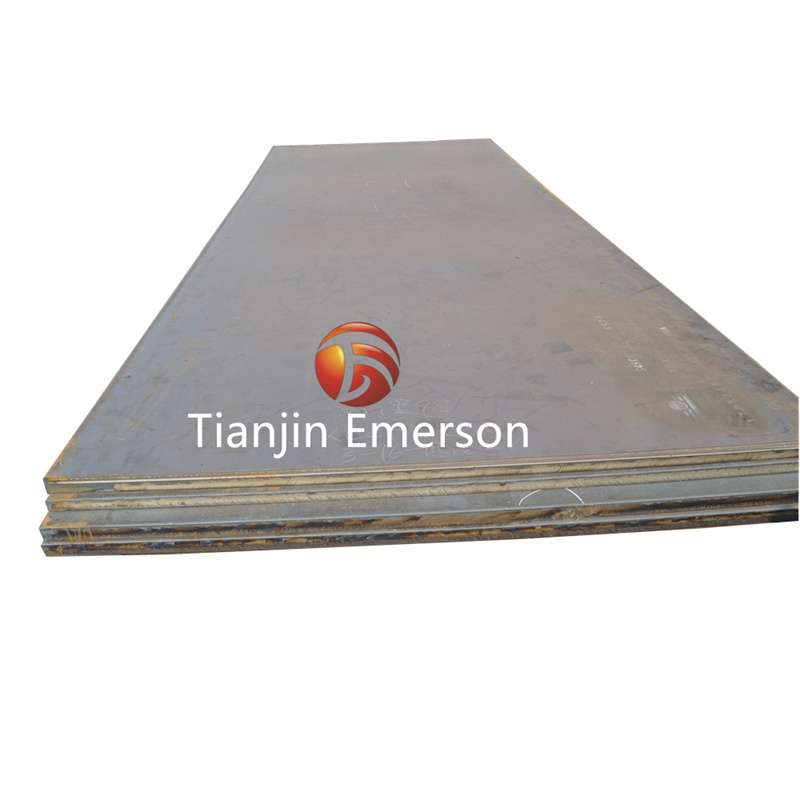
This natural cooling process creates a dull, blue-gray, scaled texture on the surface. The edges of the plate become slightly rounded as the material shrinks during cooling. Hot rolled products offer superior flexibility and formability compared to their cold-finished counterparts. They are highly cost-effective for large-scale structural projects where surface aesthetics are secondary to raw strength.
Cold rolled alternatives undergo further processing at room temperature. This provides higher tensile strength, tighter dimensional tolerances, and a much smoother surface finish. However, cold rolling significantly increases manufacturing costs. The immense pressure required to reduce steel thickness at room temperature limits the maximum thickness that mills can efficiently produce. For heavy structural applications, hot rolled material remains the undisputed standard.
Material Specifications and Solution Categories
Selecting the right material grade dictates the success of your fabrication project. You must match the chemical composition and mechanical properties of the steel to the specific environmental and structural demands of the application. Understanding the primary solution categories helps you narrow down your procurement options quickly.
Structural Carbon Steel Plate (ASTM A36)
ASTM A36 remains the foundational industry standard for general construction and heavy manufacturing. It features a specific chemical composition optimized for weldability and machinability. The carbon content is kept relatively low, typically capped between 0.25% and 0.29% depending on the plate thickness. This prevents the material from becoming too brittle during fabrication. A36 provides a minimum yield strength of 36,000 psi and a tensile strength ranging from 58,000 to 80,000 psi.
This inherent durability makes it the go-to choice for heavy equipment frames, base plates, and structural supports. High-stress applications demand this level of structural integrity. It handles heavy static and dynamic loads without excessive wear and tear. When sourcing structural carbon steel plate, verifying the A36 specification guarantees reliable, predictable performance across a wide range of industrial environments.
High-Strength Low-Alloy (HSLA) Options
Some engineering projects require more strength than standard carbon plate can provide. High-Strength Low-Alloy (HSLA) grades, such as ASTM A572, fill this gap. A572 is commonly available in Grades 50, 60, and 65, which correspond to their respective yield strengths in thousands of psi. These grades incorporate small amounts of alloying elements like columbium and vanadium.
These additions significantly increase the yield strength of the plate. You achieve this higher strength without a proportional increase in the overall weight of the material. This makes HSLA plates ideal for mobile equipment, crane booms, and structural frames where weight reduction is critical. Using HSLA allows engineers to specify thinner plates while maintaining the required load-bearing capacity, ultimately reducing the total weight of the finished assembly.
Abrasion Resistant and Pressure Vessel Grades
Specialized categories exist for extreme operating environments. Abrasion Resistant (AR) grades, such as AR400 and AR500, are designed to handle severe wear and impact. These plates undergo a quenching and tempering process at the mill that drastically increases their surface hardness. They are used in mining equipment, dump truck beds, and material handling chutes where standard carbon steel would wear away in weeks.
Pressure vessel grades, like ASTM A516, are engineered for pressurized environments and extreme temperature fluctuations. They offer exceptional notch toughness and resist cracking under pressure. Buyers must rule out standard hot rolled options immediately if their application involves extreme abrasion, high pressure, or cryogenic temperatures. Standard grades will fail catastrophically under these specific conditions.
| Material Grade | Minimum Yield Strength | Primary Characteristics | Typical Applications |
| ASTM A36 | 36,000 psi | Excellent weldability, low carbon, highly formable. | Base plates, structural frames, general fabrication. |
| ASTM A572 Gr 50 | 50,000 psi | High strength-to-weight ratio, alloyed with columbium/vanadium. | Crane booms, bridges, heavy transport equipment. |
| AR400 | 140,000 psi (Typical) | Quenched and tempered, extreme surface hardness. | Mining buckets, chutes, dump truck beds. |
| ASTM A516 Gr 70 | 38,000 psi | High notch toughness, resists cracking under pressure. | Boilers, pressure vessels, cryogenic storage. |
Evaluation Dimensions: Tolerances, Finish, and Fabrication
Procurement does not end with selecting a grade. You must evaluate the physical dimensions, surface finish, and edge conditions of the plate. These factors directly impact how easily the material can be processed in your fabrication shop. Failing to account for these variables leads to unexpected secondary processing costs and production bottlenecks.
Managing Mill Scale and Surface Finish
The high-temperature hot rolling process inevitably forms mill scale. This scale is a complex layer of iron oxides, primarily wüstite, magnetite, and hematite. It forms as the hot steel reacts with oxygen in the air during cooling. Mill scale directly impacts downstream fabrication processes. Welding, painting, and powder coating require clean, bare metal surfaces to adhere properly.
- Order the plate "pickled and oiled" (P&O) directly from the mill for thinner plates. The pickling process uses hydrochloric acid to dissolve the scale, and the oil prevents flash rusting.
- Plan for in-house mechanical removal using angle grinders fitted with flap discs for localized weld preparation.
- Contract a third-party processor for shot blasting (specifying an SP6 commercial blast) if the entire plate requires a clean surface for industrial coatings.
Edge Conditions
Edge types vary significantly based on how the plate is processed at the mill or service center. You must choose the edge type based on your specific fabrication steps. Specify a machined or sheared edge if the edge will be exposed or requires precise fit-up for welding.
| Edge Type | Characteristics | Best Application |
| Mill Edge | Natural, slightly rounded, rough texture, retains mill scale. | Hidden structural components, applications where edges are trimmed later. |
| Sheared Edge | Straight, mechanically cut, may have slight distortion or burrs. | General fabrication, base plates, non-critical exposed edges. |
| Flame-Cut Edge | Thermally cut, hardened heat-affected zone, rougher surface. | Heavy structural plates, custom shapes, thick materials. |
| Machined Edge | Perfectly square, smooth, tight dimensional tolerances. | Precision engineering, automated welding, exposed architectural elements. |
Dimensional Tolerances (Flatness, Camber, and Thickness)
You must set realistic expectations for dimensional variance. Cooling shrinkage inherently affects flatness and thickness consistency across a heavy steel plate. Heavy plates will rarely be perfectly flat straight out of the mill. ASTM A6 standards dictate the acceptable variations in dimensions for hot rolled structural steel.
Thickness tolerances can vary slightly from the center of the plate to the edges. This phenomenon is known as "crown," where roll deflection causes the center of the plate to be marginally thicker than the outer edges. Camber, which is the horizontal bowing of the plate along its length, is also a factor. ASTM A6 allows for specific camber limits, typically 1/8 inch per 5 feet of length. If your engineering design requires tighter dimensions than standard mill tolerances allow, you must specify restricted tolerances on your purchase order. This often requires the service center to perform additional stretcher leveling or machining before delivery.
Compliance, Certification, and Quality Assurance
Quality assurance is paramount when purchasing heavy structural materials. You cannot rely on visual inspections alone to verify the integrity of a steel plate. Strict documentation and receiving protocols ensure that the material you ordered is exactly what arrives on your dock.
Material Test Reports (MTRs)
Material Test Reports are non-negotiable documents in steel procurement. You must review them carefully before accepting any delivery. The MTR provides the certified chemical and physical properties of the specific heat of steel used to roll your plate. Look for the heat number first. This number must match the physical stamp or stencil on the plate itself.
Verify the chemical analysis to ensure carbon, manganese, and other elements fall within the ASTM specification limits. Check the mechanical properties, specifically the yield strength, tensile strength, and elongation percentages. If the application requires impact resistance, verify the Charpy V-Notch test results. This test measures the impact energy absorbed by the steel at specific temperatures, ensuring it will not become brittle in cold environments. This documentation ensures the delivered material matches the requested engineering standard.
Receiving Inspection Protocols
Inspect materials immediately upon delivery. Create a strict, standardized checklist for your receiving department. You must differentiate between acceptable surface oxidation and unacceptable material flaws. Light surface rust is entirely normal for hot rolled products stored outdoors. However, deep pitting compromises the structural thickness of the plate.
- Verify the heat numbers stenciled on the plates match the provided MTR documentation exactly.
- Measure the thickness at multiple points along the edge using calibrated micrometers to ensure ASTM A6 compliance.
- Inspect the edges for severe laminations or cracking that indicate poor rolling practices at the mill.
- Check for excessive gouges, deep scratches, or handling damage caused by chains or forklifts during transit.
- Evaluate the flatness of the plate against the specified tolerance requirements using a straightedge and feeler gauges.
ISO and Traceability
Source your materials from ISO-certified mills or reputable service centers. ISO 9001 certification guarantees that the supplier adheres to strict quality management systems. This ensures complete material traceability from the raw billet to the final cut plate. Traceability is critical for liability and compliance in heavy construction, aerospace, and energy sectors.
Consistent sourcing from certified suppliers also ensures predictability across multiple production runs. When you know the material will behave identically batch after batch, your fabrication processes become much more efficient. Reliable sourcing prevents unexpected welding defects or machining anomalies down the line. You avoid the hidden costs of adjusting weld parameters or replacing broken tooling due to inconsistent material hardness.
Cost Factors and Supply Chain Realities
Understanding how steel is distributed helps you optimize your procurement budget. The initial material grade is only one part of the equation. You must analyze the variables that dictate final project expenses and delivery timelines.
Cost Variables
Several distinct factors influence the final cost of heavy steel plate. The base material cost fluctuates based on raw material availability, iron ore production, and global demand. Alloy surcharges are added to the base cost for grades like HSLA or AR plate, reflecting the market value of elements like vanadium, columbium, or chromium.
Processing fees also impact the final budget significantly. If you require the service center to perform plasma cutting, laser cutting, or precision leveling, these services add to the total invoice. You must weigh the cost of having the supplier process the material against the cost of performing those operations in-house. Sometimes paying a premium for pre-cut parts saves thousands in internal labor and scrap waste.
Volume and Freight
Analyze your ordering strategy based on volume and logistics. Purchasing master plates directly from a rolling mill requires high minimum order quantities, often in the hundreds of tons. This strategy offers the lowest possible unit cost. However, it requires you to manage large inventories, tie up capital, and handle all secondary processing internally.
Buying pre-cut or leveled plates from a service center means a higher unit cost. The service center absorbs the inventory risk and processing labor. In return, you get much faster delivery, lower internal inventory burdens, and material that is ready for immediate fabrication. Freight weight limits also play a major role. A standard flatbed trailer maxes out around 48,000 pounds. Shipping heavy plates over long distances requires careful load planning to maximize freight efficiency.
Market Volatility
The steel market is inherently volatile. Global scrap metal indices shift constantly, directly impacting the cost of new steel production. Mill utilization rates affect lead times; when mills are running at high capacity, lead times stretch from weeks to months. Energy costs also impact processing and transportation expenses.
You must account for these variables when validating quote expiration dates. A quote for heavy plate may only be valid for a few days in a volatile market. Maintaining close communication with your suppliers helps you anticipate market shifts and secure material before lead times become unmanageable.
Implementation Risks and Mitigation in Fabrication
Procuring the right material is only half the battle. You must understand how hot rolled plate behaves during fabrication. Anticipating implementation risks allows you to adjust your welding and machining processes, preventing costly rework.
Welding Considerations
Welding directly over heavy mill scale creates significant structural risks. The scale traps moisture and impurities. When subjected to the intense heat of a welding arc, these impurities cause porosity in the weld pool. The scale also acts as an insulator, leading to a lack of fusion between the weld metal and the base plate. This results in weak joints that will fail under load.
You must prepare the weld zone properly. Grinding, sanding, or shot blasting the surface is absolutely necessary for structural integrity. The bare metal must be exposed at least one inch on either side of the intended weld joint. For plates thicker than one inch, pre-heating the material before welding is often required to slow the cooling rate and prevent hydrogen-induced cracking. Proper preparation ensures strong, compliant joints that pass ultrasonic and radiographic inspections.
Machining and Distortion
Hot rolled products inherently contain residual stresses. These stresses develop as the plate cools unevenly on the run-out table at the mill. The outer surfaces cool faster than the core, locking tension into the material. Aggressive machining, such as heavy milling, Blanchard grinding, or deep drilling, releases these trapped stresses.
When the stresses are released, the plate can warp, bow, or twist unexpectedly. This distortion ruins tight-tolerance machined components. You can mitigate this risk by using thermal stress relieving before machining. Heating the plate to a specific temperature and cooling it slowly in a furnace relaxes the internal stresses. Alternatively, you can specify normalized plate, which undergoes a specialized heat treatment at the mill to ensure uniform grain structure and minimal residual stress.
Conclusion
Hot rolled steel plate remains the most cost-effective and reliable solution for structural and heavy-duty applications. Its raw strength and formability make it indispensable for heavy manufacturing. Successful procurement requires you to account for its inherent surface conditions, dimensional tolerances, and processing behaviors.
Your shortlisting logic must remain strict. Match the specific ASTM grade to the calculated structural load. Align the edge and surface specifications with your internal fabrication capabilities. Choose a supplier that consistently meets your certification, traceability, and volume needs.
- Compile a comprehensive Request for Quote (RFQ) that details exact dimensional thicknesses, required ASTM grades, and specific edge conditions.
- Define acceptable dimensional tolerances clearly in your procurement documents to avoid receiving warped or out-of-spec plates.
- Mandate the delivery of Material Test Reports (MTRs) with every shipment and verify heat numbers before unloading.
- Establish a rigorous in-house receiving inspection checklist to identify unacceptable surface flaws or handling damage immediately.
- Evaluate your internal processing capabilities for mill scale removal and stress relieving before finalizing your order strategy.
FAQ
Q: What is the difference between hot rolled sheet and hot rolled plate?
A: The primary difference is the thickness threshold. Flat-rolled steel transitions from sheet to plate when it exceeds 0.230 inches (roughly 3/16"). Procurement shifts from using gauge measurements to exact dimensional thickness. Plates are generally used for heavy structural applications, while sheets are used for forming and lighter fabrication.
Q: Can you machine hot rolled steel plate?
A: Yes, but it requires careful preparation. The abrasive mill scale causes rapid tool wear and must be removed. Aggressive machining releases residual stresses trapped during the cooling process, which can cause the plate to warp. Thermal stress relieving or using normalized plate helps mitigate this distortion.
Q: Why does hot rolled steel have a blue-gray, flaky surface?
A: The blue-gray surface is called mill scale. It forms naturally during the high-temperature hot rolling process. As the steel cools at room temperature, iron oxides develop on the surface. This creates a dull, flaky texture that requires mechanical or chemical removal before welding or painting.
Q: Is A36 the only type of structural carbon steel plate?
A: No. While ASTM A36 is the most common grade for general construction, many other options exist. Grades like ASTM A572 offer significantly higher yield strength. These are used when engineering requires stronger materials without adding excessive weight to the overall structure.
Q: Do I need to remove mill scale before welding hot rolled plate?
A: Yes. Welding directly over mill scale compromises weld integrity. The scale traps moisture and impurities, leading to porosity and a lack of fusion in the joint. You must grind, blast, or chemically remove the scale around the weld zone to ensure a strong, compliant connection.
Q: How are heavy steel plates measured?
A: Heavy steel plates are measured by exact dimensional thickness, width, and length rather than gauge. Thickness is specified in decimal inches, fractions, or millimeters. This precise measurement allows engineers to calculate exact theoretical weights for structural load planning and freight logistics.


