Heavy equipment manufacturers face compounding pressures to increase payload capacities and extend equipment lifespans while simultaneously reducing overall structural weight. Specifying standard mild steel for heavy-duty applications results in excessively heavy components. Upgrading to high-yield materials introduces severe complexities in cutting, forming, and welding. Misjudging the balance between material hardness and fabricability leads to structural failures, delayed production, and compromised safety on the job site.
Successfully transitioning to or optimizing the use of high-yield materials requires a rigorous evaluation of metallurgical properties, processing limitations, and supplier capabilities. Fabricators cannot simply swap out materials without adjusting their entire production workflow. This guide breaks down the technical criteria for selecting and fabricating high strength steel plate for heavy industrial applications, providing field-tested parameters for managing heat input, bending stresses, and weld integrity.
Key Takeaways
Grade Selection Dictates Fabricability: Choosing between quenched and tempered grades (like ASTM A514) and European structural equivalents (like S690QL) fundamentally alters your welding and forming procedures.
Cutting Precision Requires Heat Management: High strength plate cutting demands strict control over the Heat-Affected Zone (HAZ) to prevent localized hardening and micro-cracking.
Weldability is the Primary Bottleneck: Higher yield strengths generally correlate with higher carbon equivalents, necessitating strict pre-heating, controlled cooling, and precise consumable selection to avoid hydrogen-induced cold cracking.
Total Cost Extends Beyond Material Price: The true cost of heavy machinery steel parts includes the specialized tooling, extended processing times, and stringent quality assurance required to fabricate high-yield plates.
Defining Success Criteria for Heavy Machinery Components
Performance vs. Weight (Strength-to-Weight Ratio)
Evaluating how high-yield materials allow for thinner plate sections without sacrificing structural integrity directly impacts fuel efficiency and payload in mobile equipment like cranes, excavators, and haul trucks. By reducing the dead weight of the structural chassis, manufacturers can increase the operational lifting capacity and extend the functional range of the machinery. A crane boom fabricated from 100 ksi yield material can lift significantly more than one made from 36 ksi material of the same dimensions, simply because the boom itself weighs less. This strength-to-weight advantage is the primary driver for upgrading materials in mobile heavy equipment.
The Baseline Transition (Mild Steel vs. High Strength)
Benchmarking high-yield materials against standard structural carbon steels such as A36 or 1020 reveals an exponential leap in yield strength. However, this increase in strength comes alongside a noticeable drop in natural ductility and weldability. Engineers must account for these mechanical shifts early in the design phase to prevent manufacturing bottlenecks. You cannot treat a 100 ksi plate the same way you treat A36. The forming tonnage requirements triple, the springback during bending becomes aggressive, and the welding procedures require strict thermal management to prevent catastrophic cracking.
Impact Toughness at Sub-Zero Temperatures
Assessing Charpy V-Notch (CVN) requirements is critical for equipment operating in extreme environments, dynamic loading zones, and structural connections. Materials must absorb sudden impacts without brittle fracture, especially when subjected to freezing temperatures in mining or offshore applications. When a loader bucket strikes a rock face at -40 degrees, the structural mounts must flex and absorb the shock rather than shatter. Specifying the correct CVN rating at the anticipated operating temperature ensures the steel retains enough toughness to survive dynamic shock loads.
Wear Resistance vs. Structural Integrity
Differentiating between structural high-strength plates designed for load-bearing and abrasion-resistant (AR) plates designed for surface wear is essential. Identifying where hybrid properties are required ensures that components subjected to both high stress and heavy friction perform reliably over time. AR plates get their hardness from high carbon and rapid quenching, making them excellent for dump bodies but terrible for structural chassis rails due to poor fatigue resistance. Structural high-yield plates balance strength with enough ductility to handle cyclic loading.
Thickness Requirements & Structural Scale
Establishing criteria for heavy steel plates typically involves navigating thicknesses ranging from 1 inch to 10 inches. Extreme thicknesses are utilized in massive load-bearing applications like bridge construction, energy infrastructure, and heavy machinery chassis, requiring specialized handling and fabrication techniques. As plate thickness increases, the core of the plate cools slower during the mill's quenching process, which can lead to lower yield strengths at the center of the plate compared to the surface. Designers must verify the mechanical properties at the specific thickness required for their application.
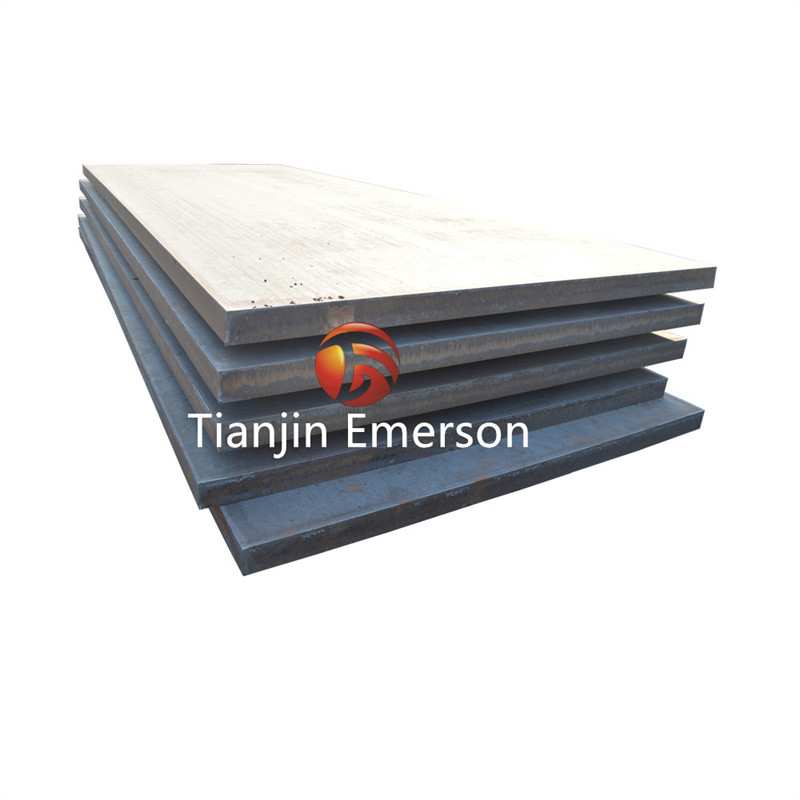
Evaluating High Strength Steel Plate Grades
ASTM A514 Steel Plate (Quenched and Tempered)
ASTM A514 steel plate offers a minimum yield strength of 100 ksi for thicknesses up to 2.5 inches, alongside high tensile strength. Common applications include crane booms, transport trailers, and earthmoving equipment chassis. The primary limitation is the strict adherence to welding heat input limits required to maintain its quenched and tempered mechanical properties. If a welder pumps too much heat into an A514 joint, they will anneal the Heat-Affected Zone, destroying the 100 ksi yield strength and creating a weak point that will fail under load.
S690QL Steel Plate (European Standard EN 10028-6)
S690QL steel plate provides a 690 MPa minimum yield strength and excellent low-temperature toughness, indicated by the "L" designation. It is widely used in heavy lifting equipment, offshore structures, and specialized heavy machinery steel parts. Availability and certification crossover challenges can arise when substituting this grade for North American standards. Fabricators must ensure their Welding Procedure Specifications (WPS) are properly qualified for S690QL, as the European testing standards differ slightly from AWS D1.1 requirements.
4140 Alloy Steel Plate
This grade boasts an exceptional strength-to-weight ratio, high hardness, and fatigue resistance, making it ideal for high-stress machine components, gears, and structural pins. However, it suffers from poor inherent weldability compared to lower-carbon alternatives and requires extensive pre-weld and post-weld heat treatment. Welding 4140 without a massive pre-heat (often exceeding 500 degrees Fahrenheit) guarantees immediate underbead cracking. It is primarily a machining grade rather than a structural fabrication grade.
Grade Comparison Matrix
| Grade | Yield Strength (Min) | Weldability | Primary Application |
| ASTM A514 | 100 ksi (690 MPa) | Requires strict heat input control | Crane booms, transport trailers |
| S690QL | 690 MPa | Good, requires pre-heating | Offshore structures, heavy lifting |
| 4140 Alloy | Varies by heat treatment | Poor, requires PWHT | Gears, high-stress pins |
| A36 (Baseline) | 36 ksi (250 MPa) | Excellent | General structural frames |
Technical Challenges in High Strength Plate Cutting
Thermal vs. Mechanical Cutting Dynamics
Oxy-fuel cutting is necessary for plates exceeding 2-3 inches but creates the largest Heat-Affected Zone (HAZ). High-definition plasma offers an optimal balance of speed and edge quality for plates up to 2 inches. Laser cutting provides maximum precision for thinner sections, minimizing the need for secondary machining. When processing heavy plates, the choice of cutting method dictates the amount of edge preparation required before welding. Oxy-fuel cut edges on high-yield materials often require grinding to remove the hardened, brittle layer before a structural weld can be applied.
Managing the Heat-Affected Zone (HAZ)
high strength plate cutting alters the microstructure of quenched and tempered steels. Mitigation strategies include submerged cutting, post-cut edge machining, and controlled feed rates to prevent edge cracking and maintain material integrity. If the cutting speed is too slow, excess heat builds up, widening the HAZ and potentially causing the plate edge to warp or harden to the point where standard drill bits will shatter upon contact.
Machining and Drilling Realities
Tool wear is a significant consideration. The necessity of carbide tooling, rigid setups, and high-pressure coolant becomes apparent when drilling or milling high-yield plates, as standard high-speed steel tooling will degrade rapidly under the extreme hardness of the material. Machinists must reduce spindle speeds and increase feed rates to ensure the tool cuts through the material rather than rubbing against it, which causes work-hardening and destroys the insert.
Forming and Bending High-Yield Materials
Overcoming Springback
Calculating the increased springback inherent in high-yield materials compared to mild steel is crucial. Fabricators must implement tooling adjustments and over-bending techniques to achieve precise final dimensions. A 90-degree bend in A36 might require bending to 88 degrees to account for springback. That same bend in A514 might require bending to 80 degrees. Operators must perform test bends on scrap drops from the exact same heat lot to dial in their press brake settings.
Minimum Bend Radii and Grain Direction
High-strength plates require significantly larger bend radii, often three to four times the plate thickness. Bending perpendicular to the rolling direction is of critical importance to prevent outer-fiber fracturing during the forming process. If you attempt to bend a 1-inch thick A514 plate over a tight V-die parallel to the grain, the outer radius will split open like dry wood. Always orient nested parts on the plasma table so the bend lines run across the grain.
Tonnage Requirements for Press Braking
Fabricators must calculate the exponential increase in press brake tonnage required as yield strength and plate thickness increase. Upgrading to heavier-duty press brakes is often necessary when transitioning from mild steel. A press brake that easily bottoms out 1/2-inch mild steel will stall or suffer hydraulic damage if an operator attempts to form 1/2-inch 100 ksi plate using the same die setup. Bottom bending is generally prohibited; air bending is mandatory.
Cylindrical Plate Rolling Challenges
The mechanics of forming massive plates into high-precision structural cylinders involve managing edge flat-spots and the high residual stresses induced during cold rolling. Specialized rolling equipment and multi-pass techniques are required to achieve accurate cylindrical forms. Operators must pre-bend the leading and trailing edges of the plate in a press brake before feeding it into the plate rolls, otherwise, the cylinder will have a pronounced flat section at the longitudinal seam.
Welding and Joining High Strength Steel (Risk Mitigation)
Hydrogen-Induced Cold Cracking (HICC)
HICC is the primary failure mode in high-strength welds. Prevention relies on using low-hydrogen consumables, proper storage in baking ovens, and maintaining strict joint cleanliness prior to welding. Moisture from the air, rust on the plate, or cutting fluids left on the joint introduce hydrogen into the weld pool. As the weld cools, the hydrogen becomes trapped in the hardened microstructure, building immense internal pressure until the weld cracks, often hours or days after the welding is completed.
Pre-Heating and Interpass Temperature Control
Calculating required pre-heat temperatures based on plate thickness and Carbon Equivalent is mandatory. Maintaining interpass temperatures prevents the HAZ from cooling too rapidly and forming brittle martensite, which leads to structural failure. Welders must use temperature-indicating crayons or digital pyrometers to verify the base metal is at the correct temperature before striking an arc. If the interpass temperature exceeds the maximum limit, the welder must stop and let the joint cool to prevent annealing the base metal.
Matching Consumables to Base Metal
Engineers must decide when to use matching strength consumables for full load transfer versus under-matching consumables to increase weld ductility in highly restrained joints. This decision directly impacts the fatigue life of the assembly. In many heavy equipment chassis designs, under-matching the weld metal (e.g., using an 80 ksi wire on 100 ksi plate) is preferred for fillet welds because the softer weld metal can yield slightly, absorbing stress that would otherwise cause a crack in the HAZ.
Stress Management in Multi-Part Assemblies
Controlling weld shrinkage and dimensional distortion is complex when integrating multiple components into high-load structures. Post-weld stress relief options, whether thermal or vibratory, must be evaluated for their impact on quenched and tempered plate properties. Thermal stress relief on A514 must be performed at temperatures at least 50 degrees below the original tempering temperature of the plate, otherwise, the entire structure will lose its mechanical strength.
Supplier Evaluation and Material Traceability
Material Traceability and Mill Test Reports (MTRs)
Ensuring the supplier provides verified MTRs confirming heat treatment batches, chemical composition, and mechanical testing is non-negotiable for critical load-bearing applications. Fabricators must track heat numbers from the receiving dock through the cutting tables and onto the final assembly. If a field failure occurs, engineers must be able to trace the exact chemical composition of the plate to determine if the failure was a material defect or a fabrication error.
In-House vs. Outsourced Fabrication Capabilities
Evaluating whether to procure raw plate or utilize a specialized fabrication partner depends on internal capacity. Assess a fabricator's capacity for heavy-tonnage lifting, large-bed CNC machining, cylindrical rolling, and certified high-strength welding procedures. Many shops claim they can handle heavy plate, but lack the overhead crane capacity to safely flip a 20,000-pound weldment, or lack the heavy-duty positioners required to keep high-yield welds in the flat or horizontal position.
Supply Chain and Lead Time Realities
Navigating the availability of specialized grades and thick sections requires planning for extended procurement cycles. Securing reliable supply chains prevents costly production delays. Standard A36 is available at any local service center, but specific thicknesses of S690QL or A514 may require mill rollings with lead times exceeding 12 weeks. Project managers must align their engineering release dates with these extended procurement realities.
Conclusion
Audit your shop's press brake tonnage and tooling to ensure you have the capacity and the correct large-radius dies to form high-yield plates without cracking.
Implement strict low-hydrogen storage protocols for all welding consumables and mandate the use of temperature-indicating tools for pre-heat verification.
Update your CAD nesting software to automatically orient bend lines perpendicular to the material's rolling direction.
Require full Mill Test Reports (MTRs) for every plate delivered and establish a tracking system to maintain heat number traceability through final assembly.
FAQ
Q: What is the difference between ASTM A514 steel plate and AR400?
A: ASTM A514 is a structural, quenched and tempered steel designed for high load-bearing capacity and yield strength. AR400 is an abrasion-resistant steel designed specifically for surface wear and impact, but is generally not recommended for critical structural, load-bearing applications due to lower ductility.
Q: How thick can high strength steel plate be cut accurately?
A: With modern oxy-fuel and heavy-duty plasma systems, cutting can be performed on materials up to 10 inches thick. However, edge hardness and HAZ management become significantly more complex beyond 2 inches, requiring slower speeds and pre-heating.
Q: Can you weld S690QL steel plate to standard mild steel?
A: Yes, dissimilar metal welding is possible. It typically requires using a welding consumable that matches the lower-strength material to ensure adequate ductility, alongside pre-heating procedures dictated by the thicker or higher-alloy S690QL plate.
Q: Why is 4140 alloy steel plate difficult to weld compared to standard 1020 or A36?
A: 4140 has a high carbon content and high alloy content, which dramatically increases its hardenability. This makes it extremely susceptible to cracking during the rapid heating and cooling cycles of welding without intense pre-heating and post-weld thermal treatment.
Q: What is the minimum bend radius for ASTM A514 steel plate?
A: The minimum bend radius for ASTM A514 typically ranges from 3 to 4 times the material thickness, depending on the specific grade variation and the direction of the bend relative to the plate's rolling direction.
Q: Do I need to pre-heat high strength steel before thermal cutting?
A: Yes, for thicker plates or grades with high carbon equivalents, pre-heating the plate before oxy-fuel or plasma cutting reduces the cooling rate of the cut edge, preventing the formation of micro-cracks and excessive edge hardness.


