Industrial control cabinets operate as the last line of defense against catastrophic electrical failures, environmental contamination, and costly facility downtime. When sensitive programmable logic controllers (PLCs), variable frequency drives (VFDs), and heavy transformers are exposed to harsh factory floors or outdoor elements, the structural and environmental integrity of their housing becomes a strict operational priority. Relying on standard, off-the-shelf enclosures often forces engineers into a corner. Modifying these standard units on the integration floor compromises structural integrity, voids essential safety certifications, and introduces hidden labor costs that derail project timelines.
To ensure long-term reliability, facility managers and electrical engineers must evaluate custom fabrication partners based on strict criteria. Material expertise, manufacturing precision, and compliance capabilities are fundamental requirements. A properly engineered housing prevents moisture ingress, manages thermal loads, and shields against electromagnetic interference. Understanding the nuances of custom fabrication allows teams to specify enclosures that protect vital infrastructure while streamlining the final assembly process.
Material selection (Carbon vs. 304/316 Stainless) dictates the baseline lifespan and environmental resilience of any industrial electrical enclosure.
Material gauge selection (12-gauge vs. 14-gauge vs. 16-gauge) dictates structural integrity under heavy component loads and seismic conditions.
Advanced manufacturing techniques, specifically laser cutting, CNC forming, and automated Foam-in-Place Gasketing (FIPG), are non-negotiable for achieving the tight tolerances required for high-IP/NEMA ratings.
The true cost of a custom steel cabinet must be calculated by factoring in eliminated modification labor and reduced failure rates.
Vendor evaluation must prioritize in-house UL/NEMA certification capabilities to mitigate compliance bottlenecks during final deployment.
Success Criteria for an Industrial Electrical Enclosure
Defining a successful enclosure deployment requires looking beyond basic dimensions. From an engineering and facility management perspective, a successful industrial electrical enclosure must seamlessly integrate environmental protection, thermal management, and electrical grounding. It must serve as a reliable barrier while allowing for efficient maintenance access and component longevity on the factory floor.
Environmental Protection and NEMA/IP Ratings
Industrial environments present a constant barrage of threats to sensitive electronics. Airborne particulate matter, corrosive chemical vapors, high-pressure water washdowns, and ambient moisture cause rapid component failure if the enclosure is compromised. Specifying the correct protection rating is the first step in the design process. Engineers map the specific operational environment to the required standards to ensure adequate protection.
A NEMA 4X rating is mandatory for environments subjected to corrosive washdowns, such as food processing plants or chemical manufacturing facilities. This rating ensures the enclosure withstands directed water jets while resisting corrosion. Conversely, an IP67 rating might be required for applications where temporary submersion is a risk. Achieving these ratings demands precise fabrication, seamless welding, and high-quality gasketing to eliminate any potential ingress points.
| Rating Standard | Protection Level | Typical Application | Fabrication Requirement |
| NEMA 12 | Dust, falling dirt, non-corrosive liquids | Indoor manufacturing floors | Standard gasketing, continuous welds |
| NEMA 4 | Hosedown, splashing water, rain | Outdoor installations, washdown areas | Watertight seals, robust latching |
| NEMA 4X | Corrosion resistance, hosedown | Food processing, chemical plants | 304/316 Stainless steel, FIPG |
| IP67 | Dust-tight, temporary submersion | Extreme outdoor, marine | Precision laser cutting, heavy-duty seals |
Thermal Management and Component Layout
Internal heat generation is a primary cause of premature electronic failure. VFDs, PLCs, and power transformers generate significant thermal loads that must be dissipated to maintain optimal operating temperatures. The relationship between the enclosure's internal volume, the material's thermal conductivity, and the total heat load is a critical design calculation. A cramped layout restricts airflow, leading to dangerous hot spots that degrade equipment lifespan.
Fabrication requirements vary significantly based on the chosen cooling strategy. Passive dissipation relies on the surface area of the metal and incorporates stamped louvers or external heat sinks to encourage natural convection. Active cooling requires precise cutouts for HVAC units, heat exchangers, or forced-air fans. These cutouts must be integrated during the initial fabrication phase to maintain the overall structural integrity and IP rating of the unit.
EMI/RFI Shielding and Electrical Grounding
Electromagnetic interference (EMI) and radio frequency interference (RFI) pose severe risks to the stability of internal electronics, potentially causing data corruption or erratic control signals. Industrial environments are notoriously noisy, with heavy machinery and high-voltage lines generating significant interference. The enclosure acts as a Faraday cage to shield sensitive components from these invisible threats.
Fabrication-level solutions are essential for effective EMI/RFI attenuation. Continuous grounding studs must be welded directly to the chassis and doors to ensure a low-impedance path to the earth. Zinc-plated mounting plates provide excellent conductivity for component grounding. Specialized conductive gaskets are often required around doors and gland plates to maintain shielding continuity across seams and openings.
Material Selection in Steel Enclosure Fabrication
The foundation of reliable steel enclosure fabrication lies in selecting the appropriate metallurgy. The choice of material directly impacts the unit's physical performance, environmental resilience, and overall weight. Engineers balance these factors against the specific demands of the installation site to ensure long-term viability.
Carbon Steel vs. Stainless Steel (304 vs. 316)
Mild or carbon steel is the most common and cost-effective choice for general indoor industrial applications. It offers excellent structural strength and is highly formable. However, carbon steel offers minimal inherent corrosion resistance and relies entirely on robust surface coatings to prevent rust. If the coating is scratched or compromised during installation or operation, oxidation occurs rapidly, compromising the enclosure's integrity.
Stainless steel variants provide superior inherent protection for demanding environments. Type 304 stainless steel is the standard for general industrial and food-grade applications, offering excellent resistance to most oxidizing acids and cleaning chemicals. For extreme environments, such as marine installations or facilities with high chloride exposure, Type 316 stainless steel is required. The addition of molybdenum in 316 stainless significantly enhances its resistance to pitting and crevice corrosion.
Material Gauge and Structural Rigidity
Sheet metal gauge selection dictates the structural rigidity of the final product. A lower gauge number indicates thicker metal. Heavy floor-standing units that house massive transformers or motor control centers typically require 12-gauge steel to support the weight and resist deformation. Thicker materials also provide better resistance to seismic events and accidental impacts from forklifts on the factory floor.
Compact wall-mounted units often utilize 14-gauge or 16-gauge steel to reduce weight and ease installation. Regardless of the gauge, engineers design the enclosure to prevent panel oil-canning—the flexing or popping of large flat surfaces. This is achieved by incorporating strategic bends, internal stiffeners, or a heavier gauge backplate when mounting heavy sub-panels.
Surface Treatments and Corrosion Resistance
For carbon steel enclosures, the finishing methodology is the only barrier against environmental degradation. Powder coating is the industry standard, providing a thick, durable, and chemically resistant finish that outperforms traditional wet painting. Galvanizing offers excellent rust protection but can be challenging to paint over and may not provide the desired aesthetic finish for high-visibility installations.
The longevity of any coating depends entirely on surface preparation. Multi-stage pretreatment processes are critical. This involves zinc phosphating, sandblasting, or chemical etching to create a textured surface that promotes mechanical adhesion of the powder coat. Skipping these preparation steps leads to rapid coating delamination and subsequent metal failure in harsh environments.
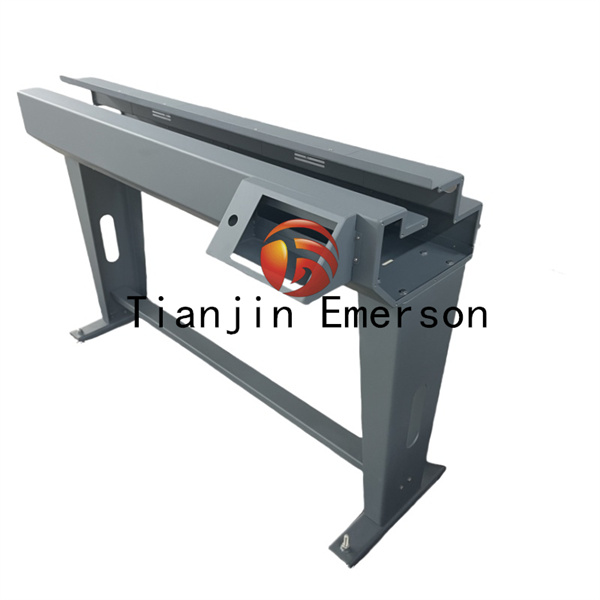
Precision Manufacturing: The Role of the Laser Cut Control Cabinet
Modern fabrication technologies have transformed how enclosures are built. The transition from manual shearing and punching to automated processes ensures that every component fits together with exacting precision. This precision directly translates to structural reliability and environmental sealing on the job site.
Tolerances and Component Fitment
A laser cut control cabinet eliminates the tolerance stack-up issues that plague traditional manufacturing methods. Laser cutting provides exceptional accuracy, ensuring that every hole, cutout, and edge is exactly where the CAD model dictates. This eliminates the need for manual filing or adjustments during assembly, saving hours of labor.
The impact of precise, burr-free cutouts is most evident in the sealing integrity of the unit. Gaskets require a perfectly smooth, flat surface to compress evenly and form a watertight seal. Hinges and gland plates must align perfectly to prevent mechanical binding or gaps that allow dust or water ingress. Laser cutting guarantees this necessary level of fit and finish.
CNC Bending and Welding Integrity
Forming the flat laser-cut sheets into a rigid three-dimensional structure requires advanced CNC press brakes. These machines maintain consistent bend radii across the entire length of the metal, which is critical for maintaining structural rigidity and ensuring that doors close squarely against the frame. Inconsistent bends lead to warped panels and compromised seals that fail field inspections.
Welding methodologies play a crucial role in maintaining NEMA/IP ratings. Continuous seam welding using TIG or MIG processes creates a solid, impenetrable joint that prevents moisture ingress. Spot welding, while faster, leaves gaps between the welds that must be filled with sealants, creating potential failure points over time. High-quality continuous welding is a hallmark of a professional fabrication partner.
Automated Foam-in-Place Gasketing (FIPG) vs. Manual Strip Gaskets
The method used to apply gaskets significantly impacts the enclosure's long-term environmental resistance. Hand-applied neoprene strip gaskets are prone to human error. The joints where the strips meet often separate over time, creating a direct path for water and dust to enter the cabinet and destroy internal components.
Automated polyurethane Foam-in-Place Gasketing (FIPG) solves this problem. A robotic dispenser applies a continuous bead of liquid polyurethane into the door channel, which then expands and cures into a seamless, highly resilient foam gasket. FIPG ensures a joint-free seal that resists degradation, maintains its compression set over thousands of door cycles, and withstands high-pressure water under washdown conditions.
Custom Steel Cabinet vs. Off-the-Shelf: Evaluating Total Value
When procuring enclosures, procurement teams often default to standard off-the-shelf units due to perceived lower upfront costs. A comprehensive analysis of the financial and operational trade-offs frequently reveals that custom fabrication provides superior overall value and reduces project friction during the integration phase.
Upfront Costs vs. Modification Labor
The sticker price of an off-the-shelf unit rarely reflects its final installed cost. Integrating standard enclosures requires significant internal labor for drilling, cutting, and tapping holes for pushbuttons, conduits, and cooling units. This manual modification carries the risk of scrapping damaged units if a mistake is made, and it inevitably compromises the factory paint finish, leaving raw metal exposed to rust.
Procuring a custom steel cabinet shifts this labor from the high-cost integration floor back to the manufacturer. The fabricator delivers a unit that is completely ready for component population, with all cutouts, standoffs, and mounting hardware perfectly positioned. This drastically lowers overall assembly time and allows highly skilled electricians to focus on wiring rather than metalworking.
Ergonomics, Access, and Modularity
Custom structural designs offer long-term maintenance benefits that standard units cannot match. Engineers specify features that improve ergonomics and accessibility for field technicians. Lift-off hinges allow doors to be completely removed during complex wiring tasks. Modular gland plates simplify cable routing and future expansions without requiring field modifications.
Three-point latching systems provide secure, even compression across the entire door gasket, while integrated viewing windows allow operators to monitor internal displays without opening the cabinet and exposing components to the environment. These custom features reduce maintenance downtime and improve operational safety for plant personnel.
Scalability for High-Volume Production
Partnering with a fabricator for standardized custom designs unlocks significant economies of scale for high-volume production runs. Once the initial engineering and prototyping phases are complete, the fabricator produces identical units rapidly and consistently, ensuring uniformity across large-scale deployments.
A strong fabrication partner provides design-for-manufacturability (DFM) engineering support. By analyzing the design, they suggest minor alterations—such as standardizing bend radii or consolidating parts—that reduce material waste and machining time, ultimately driving down unit costs over the life of the product line.
Implementation Risks in Sourcing a Sheet Metal Enclosure Box
Navigating the procurement and fabrication process involves inherent risks. Supply chain disruptions, quality control failures, and compliance issues derail projects and inflate budgets. Identifying these pitfalls early allows teams to implement effective mitigation strategies before purchase orders are signed.
Supply Chain and Lead Time Volatility
Relying on fabricators who outsource critical steps of the manufacturing process introduces severe lead time volatility. If a vendor must send raw enclosures to a third-party facility for powder coating or specialized welding, any delay at the subcontractor level directly impacts the final delivery date. Raw steel availability also causes unpredictable delays.
To mitigate this risk, require fabricators to demonstrate vertical integration. A vendor that manages in-house laser cutting, CNC bending, continuous welding, and automated powder coating maintains complete control over their production schedule. This vertical integration is essential for ensuring reliable, on-time delivery of critical infrastructure components.
Certification and Compliance Failures
Deploying a sheet metal enclosure box that fails to meet required regulatory standards is a severe operational risk. Failing UL 508A, CE, or specific NEMA testing results in rejected installations, forced redesigns, and significant project delays. Compliance must be engineered into the product from day one.
Mitigate this risk by following a structured audit process for potential fabricators:
Verify active ISO 9001 certification for quality management systems.
Request documentation of past UL 508A or NEMA compliance projects.
Inspect in-house testing capabilities, such as salt-fog chambers or water ingress stations.
Review their material traceability procedures for stainless steel grades.
Conduct a physical or virtual tour of their welding and finishing departments.
Conclusion
Initiate a technical consultation with a vertically integrated fabrication partner to review your specific environmental and thermal management challenges.
Request a prototype run to validate component fitment, cable routing, and cooling strategies before committing to full production.
Conduct a facility audit of potential partners to verify their in-house manufacturing, automated gasketing capabilities, and quality control processes.
Standardize your custom enclosure designs to leverage economies of scale and reduce long-term procurement costs.
FAQ
Q: What is the standard lead time for custom steel enclosure fabrication?
A: Lead times vary based on design complexity, raw material availability, and specific finishing requirements. Vertically integrated fabricators typically deliver custom prototypes in 3 to 5 weeks, while full production runs take 6 to 8 weeks. Outsourced finishing or specialized stainless steel grades extend these timelines.
Q: How does a laser cut control cabinet improve NEMA rating compliance?
A: Laser cutting provides exceptional edge precision and eliminates burrs, ensuring perfectly flat surfaces. This allows gaskets to seat evenly and compress uniformly around doors and cutouts, preventing the microscopic gaps that lead to water and dust ingress, thereby securing high NEMA ratings.
Q: When should I choose 316 stainless steel over 304 for an industrial electrical enclosure?
A: Specify 316 stainless steel when the enclosure will be exposed to high chloride environments, such as coastal marine installations, offshore platforms, or facilities utilizing harsh chemical washdowns. The added molybdenum in 316 prevents severe pitting and crevice corrosion.
Q: Why is Foam-in-Place Gasketing (FIPG) preferred over manual strip gaskets?
A: FIPG is applied as a liquid that expands into a continuous, seamless foam. This eliminates the vulnerable corner joints found in manual strip gaskets. FIPG offers superior durability, better compression set recovery, and stronger adhesion to the metal surface.
Q: Can a custom sheet metal enclosure box be UL certified by the fabricator?
A: Yes, if the fabricator operates a certified UL 508A panel shop, they apply the UL label directly to the custom enclosure. This ensures the physical housing meets safety standards, simplifying final certification when internal electrical components are integrated.
Q: What is the most durable coating for a carbon steel custom steel cabinet?
A: A multi-stage pretreatment followed by a high-quality polyester powder coating provides excellent durability. For extreme industrial resilience, applying a zinc-rich epoxy primer beneath the polyester topcoat significantly enhances impact resistance and prevents rust from spreading if the surface is scratched.


